Versatile supporter
Overview
People with ISFP preferences like to provide practical help to others and encourage harmony and cooperation. They’re usually modest, tolerant, and aware of the needs of others.
Characteristics
Strengths

People with ISFP preferences often care deeply for all living things. They’re genuinely concerned about the effects a situation or decision could have on other people.
Loyalty and commitment are important to them, but they also like the freedom to do things their own way—and in their own time.
Here are some common characteristics of people with ISFP preferences:
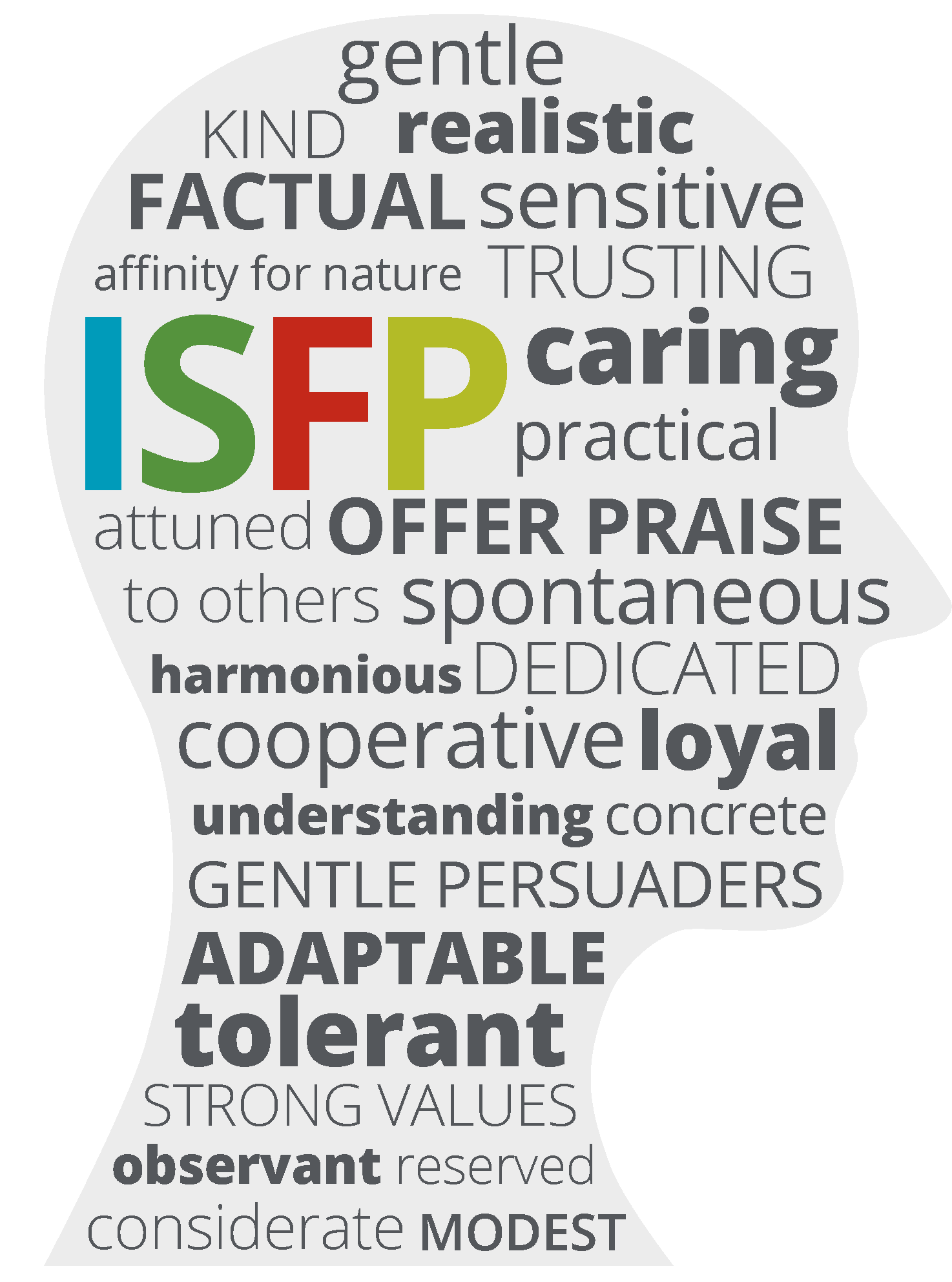
Caring—They focus on practical tasks that benefit people, animals, or other living things.
Considerate—They’re thoughtful in the way they interact with others.
Harmonious—They work collaboratively, accepting and accommodating a wide range of behavior.

Observant—They pay attention to what's going on around them, focusing their practical approach on those who need it most.
Tolerant—They don’t feel the need to organize or control other people, and prefer to have the same freedom themselves.
Interesting facts about ISFPs

While many people may say that they hate to be the center of attention, people with ISFP preferences are more likely to really mean it. They tend to feel uncomfortable in the spotlight, so the people who know them best show them quiet appreciation rather than making public declarations.
Hobbies and interests

Spending time with close friends is likely to be important to people with ISFP preferences. They probably enjoy interacting with their environment through art, nature, or helping out in the local community.
They’re generally easygoing about how they spend your free time unless plans disrupt their sense of harmony.

They may enjoy:
Swimming, dancing, or skiing.
Learning a craft.
Cooking.
Watching TV with close friends.
Stretches

Stretches are potential development areas we might miss based on our personality preferences. Awareness of possible stretches or vulnerabilities can be helpful for personal or professional development and improve our relationships with others.

Tap a development area for quick tips from our MBTI<sup>®</sup> experts.
People with ISFP preferences might:
Have trouble saying no.

Know someone who does this? Encourage them to think carefully about the impact of new tasks or responsibilities before accepting them.
They may find it helpful to keep a to-do list or add tasks to an online calendar so that they can easily see when they might be taking on too much.
Find it hard to communicate clearly and assertively because they think they might upset someone.
People with ISFP preferences may find it helpful to make notes or plan what they’re going to say before sharing with others—especially in a group discussion or meeting. This may help them structure their ideas and prepare for questions from others.
Focus so much on the present that they overlook the long-term consequences of their actions.
Know someone who does this? Try asking questions to encourage them to focus on the future.
For example, how will their decision influence their long-term plans? At work, how might their decision affect ongoing projects, the organization, or their own goals?
Lists or diagrams may also help someone with ISFP preferences organize their thoughts.
Be too self-critical or take things too personally.

Feedback can be helpful for personal and professional development. You can help someone with ISFP preferences by providing clear, specific feedback and encouraging them to ask questions if they’re unsure about feedback they’ve received.
How others see you

At your best, you’re likely to be seen as sensitive and quietly enthusiastic. People are likely to appreciate the way you facilitate discussions and listen to their points of view. You observe and support others, rather than trying to organize or control them.

Others usually see your:
Kindness
Loyalty
Spontaneous nature
You’re generally flexible and happy to accommodate others. If your values are challenged, people may see an unexpectedly vocal and forthright side of you.
Only people who know you well are likely to see your more playful side—colleagues or acquaintances may not have that chance!
Careers

People with ISFP preferences tend to be flexible, open-minded, compassionate, and supportive.

They’ll usually:
Show their appreciation for others through their actions and the practical help they offer.
Want time and space to consider new information before sharing or discussing it with others.
Prefer to experience things directly rather than hearing or reading about them.
Keep their guiding values private, rather than trying to influence or persuade others.
They generally work best in a collaborative environment that fits their core beliefs. They gently encourage colleagues to work in harmony and will usually respond flexibly when working with others to avoid interpersonal conflict.
Popular occupations

Popular occupations for people with ISFP preferences include:
Personal assistant
Grant writing
Fundraising
Nonprofit
Human resources
Nursing
Teaching
Administrator
Social work
Career trends

People with ISFP preferences want to solve problems that directly improve other people’s lives. They enjoy interacting with others behind the scenes, and they like to support common goals without being in the spotlight.
Because of these tendencies, many ISFPs enjoy careers in health care, nonprofits, teaching, and office administration.
Leadership style


In leadership or management roles, people with ISFP preferences are likely to:
Take a collaborative approach to leadership.
Offer praise and support more than criticism.
Use personal loyalty to motivate others.
Adapt to the needs of the organization.
Approach to teamwork

People with ISFP preferences enjoy developing close but professional relationships with the people they work with. They generally enjoy working on a tight-knit team. They’re interested in team members’ unique personalities and talents, and they typically want to know how they can support each individual.
When working on shared tasks, ISFPs like to be told exactly what they need to do directly and concisely.
Problem-solving approach

When trying to solve a problem, people with ISFP preferences will usually focus their energy on:
Considering the effects their actions might have on the people involved.
Gathering as many facts and as much information as possible.
They don’t usually spend as much time or energy:
Looking into other possible solutions.
Examining the logical consequences of their actions.
Preferred working environment

People with ISFP preferences tend to value:
Friendly and cooperative colleagues who share their values.
Flexibility and security.
Results-focused tasks with practical outcomes.
A private space for uninterrupted work.
Remote working tips
Remote working tips for people with ISFP preferences:
Stay connected with the people you know and trust. Set up a regular online meeting (or join a meeting they’ve already set up).
Find a quiet space to work. Let your family or housemates know if they’re distracting you.
Make full use of the added flexibility you get from remote working—but remember that others might not appreciate a late-night email or video call!
Take some time to reflect and consider what's important to you.
Check emails or other written communications before you send them. Making sure your points are clear and easy to read will help prevent confusion or misunderstandings.
Relationships

People with ISFP preferences typically appreciate their individual freedom and time to work on personal projects and hobbies. They like to balance their friendships and romantic relationships with this kind of alone time.
ISFPs are often very caring and kind to the people in their lives. Although they prefer to keep to themselves, they often attract interest from others because of their calm and easygoing nature.
Conflict

ISFPs tend to be highly observant. They quickly pick up on changes in the behavior of others or the harmony of a group. This allows them to spot conflict before it happens. However, they generally prefer to avoid conflict as much as possible; as a result, they may not know how to address conflict when it does arise.
If you have ISFP preferences, you can minimize conflict in your relationships by:
Taking some time to evaluate how much of the conflict is real and how much is in your mind. When you’re not sure, ask. Confronting the other person may help you avoid unnecessary worry.
Standing up for yourself. Becoming too upset or emotional during a conflict might make the other person more frustrated, especially if your response makes them feel bad. It’s often better to create a space where you and the other person can both share your true feelings.
Being there for the people involved. You often know just what other people need. If you see a conflict in your team or friendship group that you’re not directly involved in, you may be just the right person to help resolve it.
Friendship

People with ISFP preferences are thoughtful and dedicated friends who often put other people’s needs before their own. They like to have fun and they can be very spontaneous, which often makes for exciting and supportive friendships.
However, ISFPs require freedom and lots of alone time. This can lead to difficult relationships if others are unable to make plans on the fly or don’t respect their easygoing nature.
Love

People with ISFP preferences tend to take a while to open up with others. They’ll often need the other person to express a direct interest in their life, thoughts, and hidden talents before they’ll trust them enough to start a serious relationship.
Once they’re in a relationship, though, ISFPs are caring and easygoing partners who simply want to be happy with their significant other. Because they tend to dislike being tied to a schedule or giving up their freedom, they’ll offer the same level of independence to their partner.
Parenting

The MBTI framework can be very helpful when it comes to raising children. Knowledge of your own communication habits, stress triggers, and preferences often makes parenting easier. By integrating an awareness of differences into family life, the whole family can benefit from these insights.
Parents with ISFP preferences often encourage their children to be their true, authentic selves. They tend to be open-minded and supportive parents—and their fun, easygoing nature helps them talk to their children at the children’s level.
ISFPs are likely to get stressed if they feel they don’t understand their children’s needs, or if one of their children says something hurtful out of anger.
If you have ISFP preferences and you think your child shares your Sensing and Feeling preferences, this can help you to understand how your child takes in information and makes decisions—both of which are important for how you communicate as a parent. If you think your child’s preferences are different than yours, self-awareness will help you to change your communication and parenting style to better suit those preferences.
Stress and resilience

Different people tend to get stressed by different situations. We also tend to react to stress differently.
Here are some of the things people with ISFP preferences may find stressful:
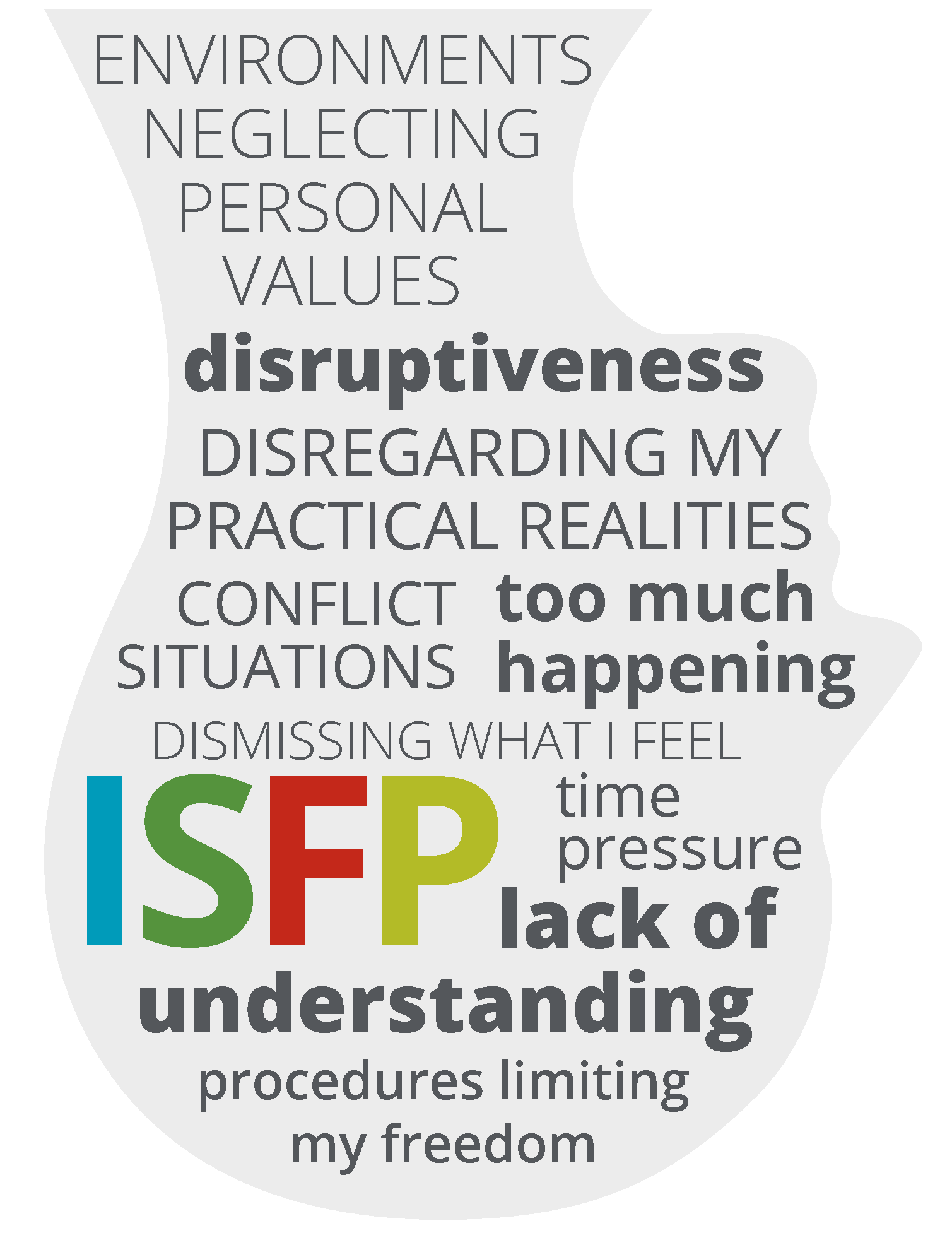
When they’re stressed, people with ISFP preferences are likely to:
Withdraw emotionally.
Feel unappreciated or undervalued.
Doubt their own abilities.

At times of extreme or prolonged stress, they may start to behave uncharacteristically. They might:
Be overcritical of themselves and others.
Communicate in an aggressive, cynical, or judgmental way without considering the impact this has on others.
Become self-indulgent or self-pitying.
To help someone with ISFP preferences recover from stress, encourage them to set achievable goals, accept compromise where necessary, and say no to new tasks or responsibilities until they feel calm again.
Managing stress

If you have ISFP preferences, try these simple strategies to balance your feelings during times of stress:
Focus on meeting your own needs and practicing self-care. Take a step back and spend some time alone to help you do this; otherwise, you may focus so much on what others are feeling that you ignore or neglect your own needs.
Don’t commit to too many social activities or work responsibilities when you’re stressed. Although these might seem like a distraction at first, they will likely make you feel more stressed.
Take steps to deal with conflict in a straightforward manner. Avoiding conflict can cause more stress in the long run. It’s often better to talk things out straightaway and resolve any issues.
How does ISFP compare?
See how ISFP relates to any other type side by side.
Compare ISFP