Practical helper
Overview
People with ISFJ preferences are responsible, patient, and loyal. They use common sense and experience to solve problems and enjoy helping others in practical ways. People often describe them as modest and traditional.
Characteristics
Strengths

Loyalty is very important to people with ISFJ preferences. They’re generally committed to their family, friends, employers, and any groups they belong to.
Here are some common characteristics of people with ISFJ preferences:
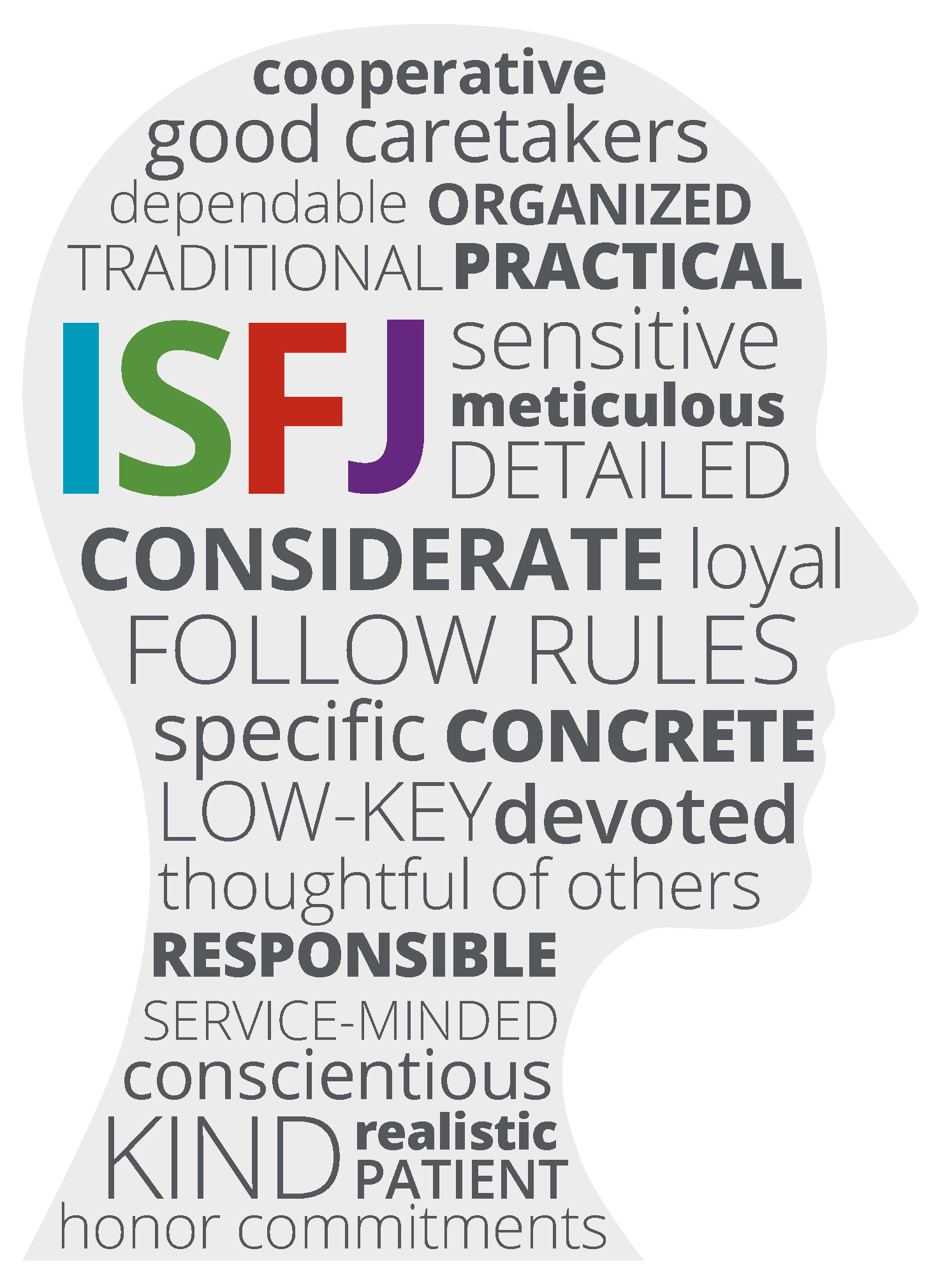
Considerate—They’re caring and thoughtful in the way they interact with others.
Conscientious—They can be depended on to do what they say they will (and do it on time).

Kind—They look for practical ways to help other people.
Organized—They approach tasks in a careful, structured way to get things done accurately.
Traditional—They respect the way things have been done in the past and encourage others to follow established processes.
Interesting facts about ISFJs

ISFJ is one of the more common personality types in the Myers-Briggs® framework. People with ISFJ preferences are natural caretakers, but they’re resourceful too. They tend to want to help people in practical and long-lasting ways.
Hobbies and interests

People with ISFJ preferences tend to have interests that focus on their physical surroundings or personal comfort. They may prefer to support friends and colleagues, rather than taking part in activities directly.
They often like to plan their free time in advance.

They may enjoy:
Cooking.
Nature walks or gardening.
Helping in the community—especially with young people.
Supporting others in sport or similar activities.
Stretches

Stretches are potential development areas we might miss based on our personality preferences. Awareness of possible stretches or vulnerabilities can be helpful for personal or professional development and improve our relationships with others.

Tap a development area for quick tips from our MBTI<sup>®</sup> experts.
People with ISFJ preferences might :
Find it hard to be objective when other people’s feelings are involved.

Know someone who does this? It may help them to talk to people who are likely to be affected by their decisions. Other people don’t always feel the way we expect them to!
Become overcautious about the future.

People with ISFJ preferences may find it helpful to practice taking small, calculated risks. At first, it may be easier for them to focus on risks that won’t affect other people.
Seem to back down or change their views when discussing things with others.
Know someone who does this? Try suggesting that they pause before responding to other people’s views—especially if they don’t agree with the other person. What do they like about the other person’s view of the situation? What don’t they like?
Lists or diagrams may help people with ISFJ preferences organize their thoughts.
Risk being overlooked or undervalued because of their natural modesty.

People with ISFJ preferences may prefer to focus on shared accomplishments such as a project outcome or team goal. You can help them by providing feedback when they’ve done a good job or encouraging them to share their personal achievements with others.
How others see you

At your best, other people tend to see you as collaborative and accommodating.
You often bring a supportive approach to your work, encouraging harmony and agreement between colleagues.

Others usually see your:
Sensitivity
Commitment
Strong values
You’re generally seen as quiet and reasonable, but if you notice others being treated unkindly or disrespectfully, you’re likely to speak up in their defense.
Careers

People with ISFJ preferences are generally sympathetic, loyal, and considerate.

They’ll usually:
Have a lot of respect for facts and details that fit their interests and experience.
Prefer information and ideas to be communicated clearly and accurately, in a structured way that is easy for them to follow.
Want time and space to reflect on and take in anything new before they start using it or discussing it with others.
Focus on practical uses of knowledge and experience to find the best way to help and support other people.
They tend to work best in a calm, friendly environment where they can make progress quietly and conscientiously. They like to feel that other people can count of them.
Popular occupations

Popular occupations for people with ISFJ preferences include:
Administrative assistant
Office manager
Event planner
Social worker
Health care
Teacher
Guidance counselor
Career counselor
Elder care
Personal assistant
Customer service
Career trends

People with ISFJ preferences want to help others. Because they tend to be practical and calm under pressure, they often choose careers where they can help people through a crisis or transition. This may lead ISFJs to careers in health care, social work, teaching, or administration.
Leadership style

In leadership or management roles, people with ISFJ preferences are likely to:
Lead reluctantly at first, but step in if they’re asked to.
Conscientiously follow existing rules and procedures.
Expect everyone to respect the needs and structure of the organization.
Focus on details to achieve practical results.
Approach to teamwork

ISFJs greatly enjoy working as part of a team and generally strive to cultivate close relationships with their teammates. They are cooperative and encouraging when working with others, and they’re always quick to point out other people’s talents and accomplishments.
Problem-solving approach
When trying to solve a problem, people with ISFJ preferences will usually focus their energy on:
Gathering as many facts and as much information as possible.
Considering the effects their actions might have on the people involved.
They don’t usually spend as much time or energy:
Examining the logical consequences of their actions.
Looking into other possible solutions.
Preferred working environment

People with ISFJ preferences tend to value:
Conscientious colleagues who share their values.
A secure and established position.
Service-oriented organizations and roles.
A calm, quiet office space.
Remote working tips
Remote working tips for people with ISFJ preferences:
If you’re new to working from home, take some time to develop a routine that works for you and your family (or anyone else who is important to you).
Set realistic expectations for yourself and others. Create a structure that allows you to meet your own practical needs and the needs of others.
Check in with family members and colleagues to find out what support they need from you.
Create a dedicated home office or working area where you won’t be interrupted by pets, family, or housemates.
Use working at home as an opportunity to reflect and take stock of what’s important to you.
Relationships

People with ISFJ preferences are often quite reserved, so they won’t typically initiate a new friendship or approach a potential romantic partner. They tend to wait for other people to approach them.
In a relationship, they are devoted caretakers and will frequently check in to see how their loved ones are doing. They often show their care for other people through actions rather than words.
Conflict

ISFJs tend to avoid conflict and confrontation where they can. If a conflict does arise, they may apologize unnecessarily and try to end the argument.
When they feel slighted or upset, someone with ISFJ preferences is unlikely to confront the other person. Instead, they may show their hurt feelings through their actions, which others may feel is a bit passive-aggressive.
If you have ISFJ preferences, you can minimize conflict in your relationships by:
Being direct and upfront about your feelings, instead of hoping that someone will ask you what’s wrong.
Understanding that sometimes a difficult discussion is the only way to resolve an issue. You may need to get to the bottom of the problem to stop it happening again.
Trying not to internalize a conflict. You might think that a relationship depends on you, and so may blame yourself if the relationship isn’t working. This isn’t true, though! Relationships can hit a rough patch for any number of reasons. It’s important to resolve the issue and move on.
Friendship

People with ISFJ preferences make great friends because they are so caring and positive. They always want to make their friends feel loved and supported, and they would do nearly anything to help their friends achieve their dreams or resolve their issues.
Because ISFJs are such people pleasers, expect a few “Are you mad at me?” texts or phone calls! These devoted friends take their roles in relationships very seriously. They always want to make sure they’re doing the right thing for their friends.
Love

ISFJs are caring and sensitive; they require one-on-one attention from a romantic partner. Because people with ISFJ preferences tend to be selfless and eager to please, they need a partner who can reciprocate this behavior and make them feel safe and appreciated.
ISFJs like to have clear roles and expectations in a relationship. Because they tend to be traditional, it’s important for them to find a partner who shares the same values.
Parenting

The MBTI framework can be very helpful when it comes to raising children. Knowledge of your own communication habits, stress triggers, and preferences often makes parenting easier. By integrating an awareness of differences into family life, the whole family can benefit from these insights.
Parents with ISFJ preferences like to care for their children and shower them with affection. They like feeling needed as a parent, and genuinely enjoy solving their children’s problems and making them feel safe and secure.
ISFJs are likely to feel stressed when their children say or do hurtful things or act out despite repeated attempts to calm them.
If you have ISFJ preferences and you think your child shares your Sensing and Feeling preferences, this can help you to understand how your child takes in information and makes decisions—both of which are important for how you communicate as a parent. If you think your child’s preferences are different than yours, self-awareness will help you to change your communication and parenting style to better suit those preferences.
Stress and resilience

Different people tend to get stressed by different situations. We also tend to react to stress differently.
Here are some of the things people with ISFJ preferences may find stressful:
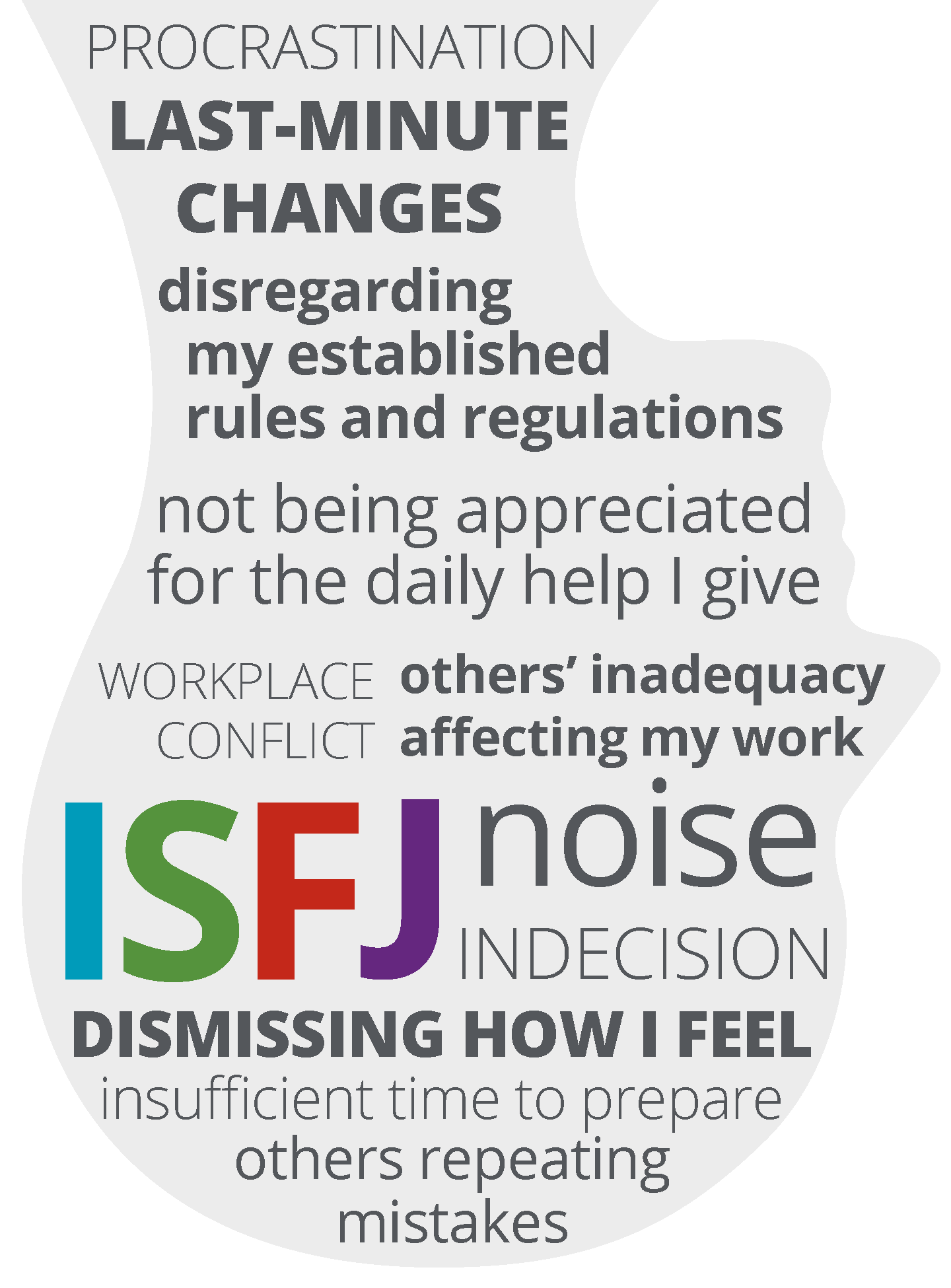
When they’re stressed, people with ISFJ preferences are likely to:
Have trouble taking in new ideas or solving problems.
Become stubborn or inflexible, placing all their trust in past experience.
Feel unappreciated and resentful toward others.

At times of extreme or prolonged stress, they may start to behave uncharacteristically. They might:
Withdraw from other people.
Catastrophize—imagining increasingly negative possibilities for the future.
Complain loudly without considering the impact their negativity has on others.
To help someone with ISFJ preferences recover from stress, allow them time to talk. Try to take their concerns seriously, even if they don’t seem serious to you!
Managing stress

If you have ISFJ preferences, try these simple strategies to balance your feelings during times of stress:
Remember, it’s OK for other people to have different views and opinions. This doesn’t make them unkind or bad people. Rather than letting differing viewpoints stress you out, try to think of them as an opportunity to broaden your horizons.
Stand up for yourself more. Because you tend to avoid confrontation, you might not tell someone when you find their behavior stressful. Try politely asking someone to stop or change behaviors you find stressful, or set boundaries for yourself to help minimize stress.
Create an inspiring workspace where you can hide from distractions. This will help you concentrate and prevent overstimulation.
How does ISFJ compare?
See how ISFJ relates to any other type side by side.
Compare ISFJ