Objective analyst
Overview
People with INTP preferences tend to be strategic and conceptual. They have an efficient, detached way of analyzing the world which often leads them to new or innovative ideas. People describe them as precise, analytical, insightful, and skeptical.
Characteristics
Strengths

Competence is usually important to people with INTP preferences. They tend to be interested in theories, concepts, and ideas more than people—although they may see people as puzzles to be solved.
They’re intensely curious about the world around them, with the drive to learn about and understand situations, problems, or anything else that interests them.
Here are some common characteristics of people with INTP preferences:
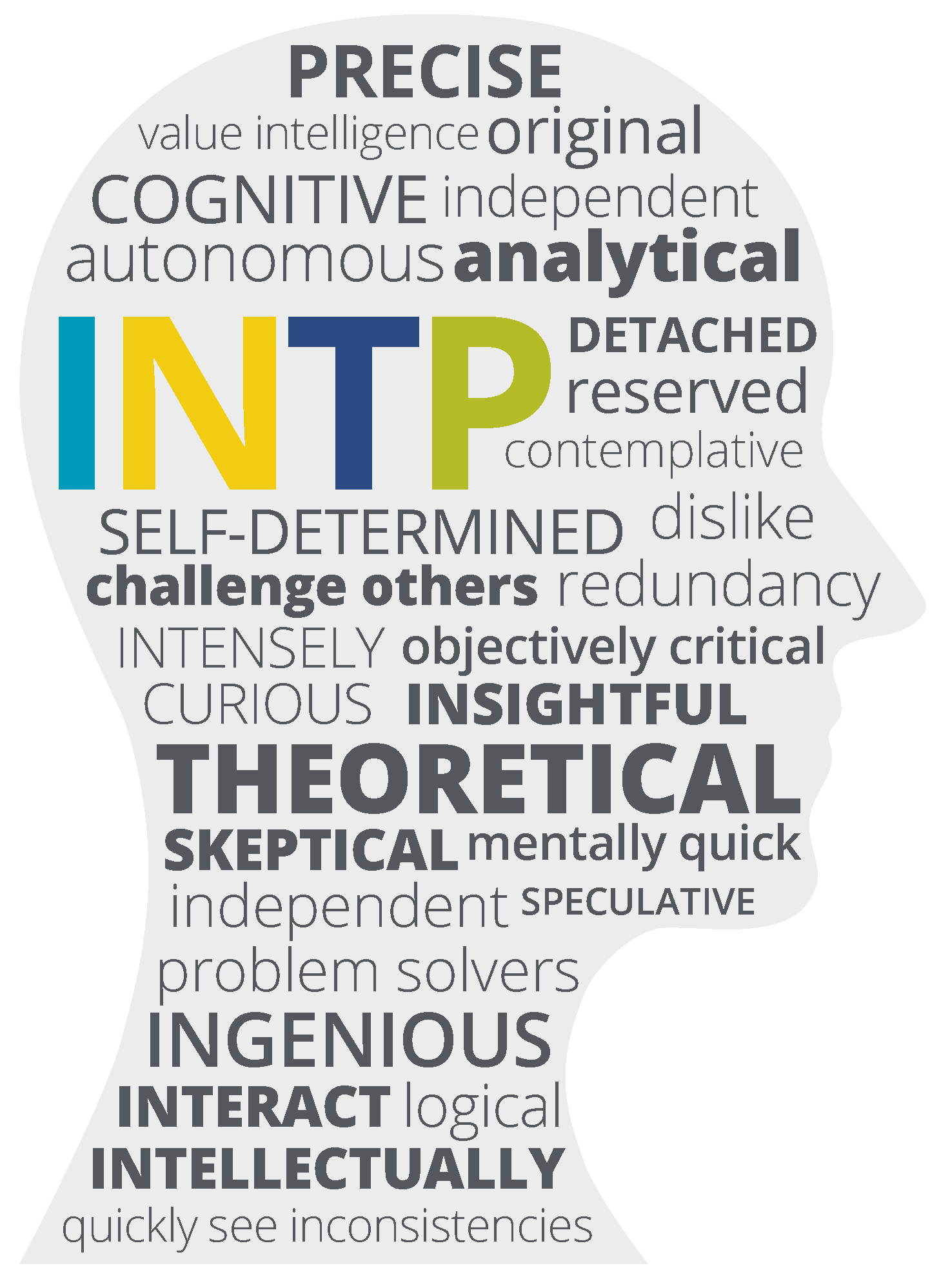
Challenging—They ask difficult questions to find out what’s wrong with a situation, then work to correct or improve it.
Independent—They prefer working alone with little guidance or supervision.
Logical—They’re objective in the way they explain things or give feedback, their approach to problems, and their decision-making.

Precise—They communicate succinctly and accurately. They’re not usually known to waste words!
Solution-focused—They enjoy solving complex problems, exploring possibilities and making connections that others may not see. They notice inconsistencies or things that are illogical and take steps to fix them.
Interesting facts about INTPs

People with INTP preferences are naturally adept at building structural models or coming up with new concepts for solving problems. They tend to see the world as a system that can be analyzed, and this is how they approach just about everything in life.
Hobbies and interests

People with INTP preferences tend to be quiet and reserved. They probably don’t enjoy team sports or socializing with large groups very much. Instead, they may like to spend their spare time alone on activities that stimulate their minds.
They may enjoy:
Skilled individual sports, such as golf or athletics.
Solving complex puzzles, such as cryptic crosswords or sudoku.
Hiking or other outdoor activities.
Reading about or learning something new.
Stretches

Stretches are potential development areas we might miss based on our personality preferences. Awareness of possible stretches or vulnerabilities can be helpful for personal or professional development and improve our relationships with others.

Tap a development area for quick tips from our MBTI<sup>®</sup> experts.
Someone with INTP preferences might:
Be hesitant to share their thought process with others.

People with INTP preferences may find it helpful to make notes or plan what they’re going to say before sharing with others—especially in a group discussion or meeting. This may help them structure their ideas, share connections, and prepare for questions from others.
Spend so much time searching for the perfect solution that they don’t make a timely decision.
Know someone who does this? Encourage them to make pro and con lists or discuss their options with others to help them decide which solution will best fit their goals. They may also find it helpful to set deadlines and milestones to keep themselves moving forward.
Seem insensitive to other people’s feelings when giving feedback.

Know someone like this? It may help them to actively gather feedback from others on their own feedback style. What could they do differently next time?
Keep their ideas to themselves and expect others to see things the way they do.

People with INTP preferences may find it helpful to share their ideas more often. Involving other people in the planning stages will help to make sure everyone knows what’s expected of them.
How others see you

At your best, people tend to see you as tolerant, quiet, and self-contained.

Others usually see your:
Drive to understand issues or information
Competence
Innovative approach
You don’t often share the depth of analysis behind the solutions you offer. However, when you’re talking about something that really interests you, you’re likely to be more energetic and engaged.
Your flexible, laid-back approach may lead others to underestimate you. When your logic is challenged, you’re likely to become more assertive and may seem stubborn or inflexible.
Careers

People with INTP preferences tend to be curious, theoretical, and abstract, often preferring to organize ideas more than people or situations.

They’ll usually:
Approach the world with skepticism, questioning and critiquing situations or ideas in an effort to improve them.
Communicate carefully and precisely—and want others to do the same.
Focus their energy on logic, analysis, and problem-solving.
Need time and space on their own to reflect on and understand issues before they discuss them with others.
They work best when they can do so independently, providing their own structure and direction, forming their own opinions, and setting their own standards. They may find it difficult to work effectively if other people don’t respect their need for time alone.
Popular occupations

Popular occupations for people with INTP preferences include:
Architect
Advertising
Artist
Human resources
Organizational development
Change management
Consultancy
Engineer
Financial analyst or advisor
Television or film writer
Designer
Software developer
Career trends

People with INTP preferences are complex problem solvers. They like to examine how things work, and they often notice things that other people miss.
INTPs rarely enjoy being micromanaged or working as part of a large team. As a result, they often take up careers that allow them to forge their own paths or create their own roles rather than falling into a traditional organizational structure.
Leadership style

In leadership or management roles, people with INTP preferences are likely to:
Lead by analyzing and understanding problems or goals.
Relate to others based on their expertise more than their position in the organization.
Want to lead others while maintaining their own autonomy.
Interact with others on an intellectual more than an emotional level.
Approach to teamwork

People with INTP preferences don’t dislike being a part of a team, but they might not think of teams as necessary. Even when they are part of a team, they still tend to do most of their work on their own—but maybe in closer proximity to others than usual.
INTPs would rather let each individual determine how they work best than tell anyone what to do. But they do enjoy discussing ideas and sharing their findings with colleagues.
Problem-solving approach
When trying to solve a problem, people with INTP preferences will usually focus their energy on:
Examining the logical consequences of their actions.
Creating and exploring possible solutions.
They don’t usually spend as much time or energy:
Gathering facts and information.
Considering the feelings of the people involved.
Preferred working environment

People with INTP preferences tend to value:
Organizations and teams that promote independence and originality.
Independent colleagues focused on solving complex problems.
Flexible policies and procedures.
A quiet, private space to work—with as few meetings as possible.
Remote working tips
Remote working tips for people with INTP preferences:
Don’t let yourself become isolated. Keep in touch with your family, friends, and colleagues.
Pay attention to your physical needs. Eat, drink, sleep, and get some exercise!
Take regular breaks away from your desk. You may find it helpful to walk around—especially when you need to be creative.
When you make a decision, let other people know—and tell them why you made it. It’s easy to forget this when you’re working remotely!
Try to avoid settling into too much of a routine. Break up your day and do something different from time to time.
Relationships

At first, people with INTP preferences may seem hard to read or disinterested in friendship or romantic relationships. Because of their quiet, reflective nature, they tend to notice other people long before other people notice them.
INTPs often take note of the people they want to get to know—and they likely only get to know someone if they think they’ll have something in common.
Conflict

INTPs tend to avoid conflict as much as possible. They often think it’s more trouble than it’s worth to work out an issue with somebody else, so they may simply let it go and hope things work out on their own. While this easygoing attitude can sometimes work for smaller conflicts, it can also cause conflicts to build into larger issues.
When they do decide to work out an issue, INTPs tend to take an approach that is calm, measured, and logical.
If you have INTP preferences, you can minimize conflict in your relationships by:
Talking things through with the other person right away. Although you might prefer to ignore issues and avoid conflict, it’s sometimes best to talk about things that are bothering you. This can help to prevent an ongoing issue or a larger conflict later.
Taking care not to talk down to others. Instead of becoming overly logical, listen to the other person’s feelings and share your own. This may help to resolve the conflict.
Staying engaged until the conflict is resolved. This can sometimes take time. Try to stay active in the discussion until you’re sure the conflict is resolved for everyone involved.
Friendship

INTPs have few close friends and rarely feel the need to expand their social circle. They like to have intellectual debates with their friends, so they prefer to spend time with people who have differing opinions but won’t get upset or offended easily.
While they don’t typically share their feelings with others, INTPs are considerate and kind people who prefer to avoid conflicts with friends.
Love

People with INTP preferences often look for partners who can match them intellectually. They tend to take a measured and analytical approach to life, so they don’t appreciate people who bring drama or extreme emotions into the relationship. While they appreciate people with different interests, they likely won’t get on so well with people who have the opposite personality preferences.
In their relationships, INTPs look for people to debate with and laugh with. Although they may seem a bit detached at times, they are dedicated partners who value their close relationships.
Parenting

The MBTI framework can be very helpful when it comes to raising children. Knowledge of your own communication habits, stress triggers, and preferences often makes parenting easier. By integrating an awareness of differences into family life, the whole family can benefit from these insights.
Parents with INTP preferences like to solve problems for their children and teach them how to solve their own problems too. They tend to stay calm and measured. They are often known for teaching their children the importance of both education and curiosity.
As parents, INTPs are likely to feel stressed when their children behave illogically, throw tantrums, or otherwise cause extreme disturbances.
If you have INTP preferences and you think your child shares your Intuition and Thinking preferences, this can help you to understand how your child takes in information and makes decisions—both of which are important for how you communicate as a parent. If you think your child’s preferences are different than yours, self-awareness will help you to change your communication and parenting style to better suit those preferences.
Stress and resilience

Different people tend to get stressed by different situations. We also tend to react to stress differently.
Here are some of the things people with INTP preferences may find stressful:
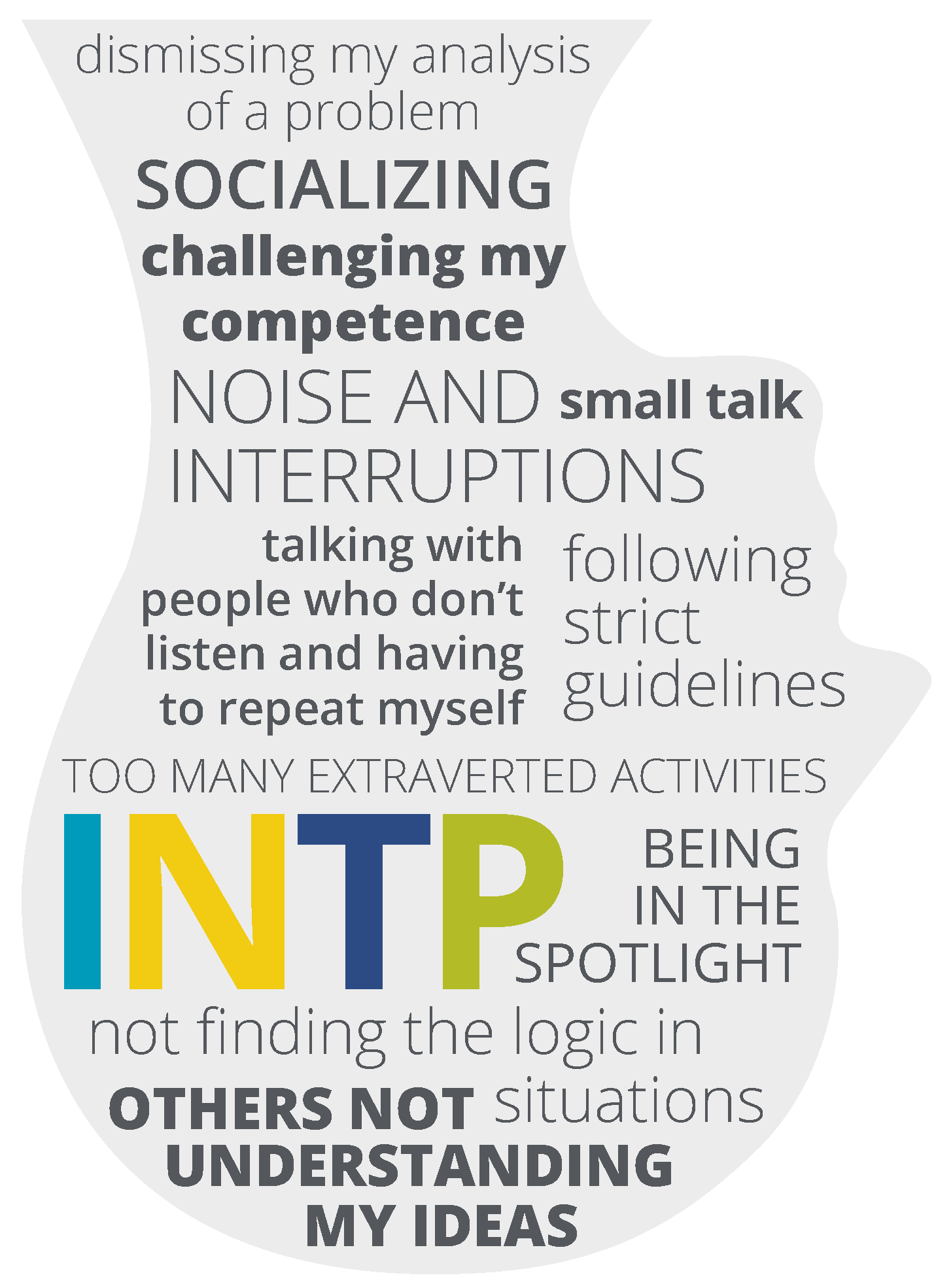
When they’re stressed, people with INTP preferences are likely to:
Become negative, argumentative, or critical.
Isolate themselves from others.
Communicate in a way that others find sarcastic or condescending.

At times of extreme or prolonged stress, they may start to behave uncharacteristically. They might:
Feel alienated from the world around them.
Show sudden and inappropriate outbursts of emotion.
Become oversensitive to what other people think or say about them.
To help someone with INTP preferences recover from stress, listen to them without judgment or encourage them to revisit the facts of the situation to look for a different perspective.
Managing stress

If you have INTP preferences, try these simple strategies to balance your feelings during times of stress:
Say no to social invites from friends and colleagues. It’s OK to politely decline an invitation to preserve your mental health and well-being.
Learn to communicate your ideas to others in a way they’ll understand. You may find it helpful to make step-by-step notes to help you share ideas in a straightforward way. At the same time, try to accept that others won’t always agree with your suggestions.
Take steps to minimize noise and distractions in your workspace. Invest in noise cancelling headphones, set your online status to “away," or block out time in your calendar to focus.
How does INTP compare?
See how INTP relates to any other type side by side.
Compare INTP