Thoughtful idealist
Overview
People with INFP preferences tend to enjoy creating new and original solutions to problems. They like to help others grow and develop to reach their full potential. They’re often great at getting things started and putting ideas into action.
Characteristics
Strengths

People with INFP preferences tend to be loyal to the people in their lives. They usually value intimacy and connection in their close relationships.
They’ll generally try to understand and appreciate other people’s behavior, approaches, or motivations. They like to explore innovative possibilities for personal and professional development and help others to be their best.
Here are some common characteristics of people with INFP preferences:
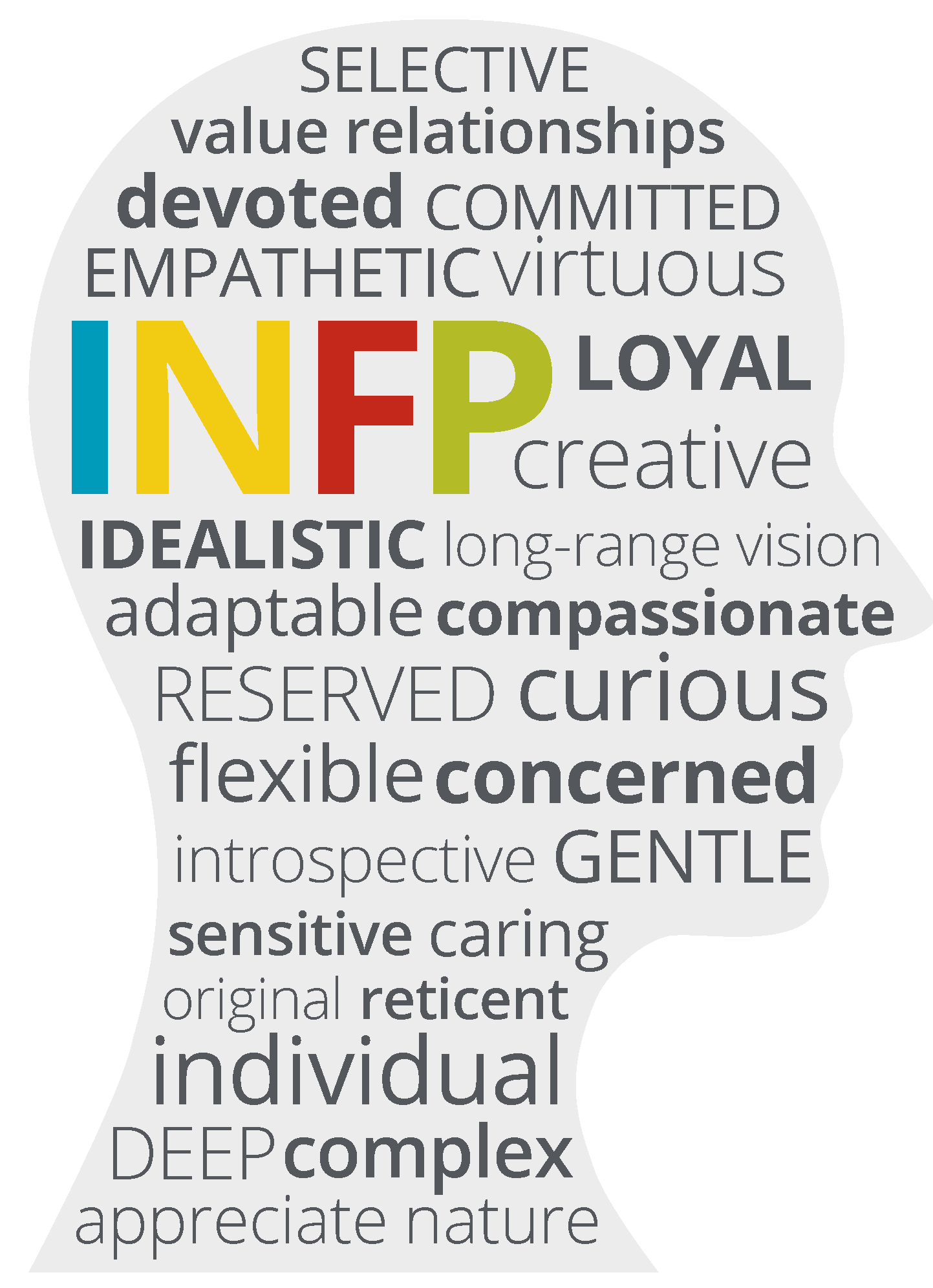
Compassionate—They care deeply about people, values, ideas, and projects that are important to them.
Committed—When they believe in something, they engage themselves fully, working tirelessly to achieve their goals.
Curious—People intrigue them. They appreciate different behaviors and approaches, and will often spend time learning about or trying to understand others.
Idealistic—They live according to their inner vision and values.
Insightful—They see connections in the behavior of people around them, forming observations and expectations that others might not see.
Interesting facts about INFPs

People with INFP preferences may seem aloof at first, but they have a lot going on internally that they don’t typically show to the outside world.
They tend to be very warm and caring to the people they’re closest to; however, people outside their inner circle might not see this side of them.
Hobbies and interests

People with INFP preferences generally need and value time on their own. They’ll probably prefer to socialize in small, informal groups and may dislike large or conventional social events.

They may enjoy:
Photography.
Playing or listening to music.
Creative writing, poetry, or keeping a journal.
Physical activities such as Zumba, dance, or Pilates.
Stretches

Stretches are potential development areas we might miss based on our personality preferences. Awareness of possible stretches or vulnerabilities can be helpful for personal or professional development and improve our relationships with others.

Tap a development area for quick tips from our MBTI<sup>®</sup> experts.
People with INFP preferences might:
Try to please too many people at once.
Know someone who does this? Encourage them to think carefully about the impact of new tasks or responsibilities before accepting them.
They may find it helpful to keep a to-do list or add tasks to an online calendar so that they can easily see when they might be taking on too much.
Have trouble finishing things because they want their work to be perfect.
People with INFP preferences may find it helpful to make lists to help them decide which tasks are most important or most relevant to their goals. You can help them by asking questions that focus on the impact a task could have.
For example, what are the benefits of finishing a task and moving on? Which tasks do they need to complete to their high standards, and which could be finished more quickly?
Spend too much time reflecting and not enough time doing things.
People with INFP preferences may find it helpful to set themselves deadlines or milestones for specific tasks to help limit the amount of time they spend thinking before they act.
Have difficulty adjusting their ideals to the reality of the world around them.

Know someone who does this? Meditation or other mindfulness techniques may help them to pause and notice the world around them.
When information or logic doesn’t support their ideals, they may find it helpful to talk to friends or colleagues who can help them find a suitable compromise.
How others see you

At your best, you’re likely to be seen as enthusiastic and committed. You may find rules and processes restrictive and prefer to work independently.

Others usually see your:
Empathy
Sensitivity
Flexibility
You’re usually accepting and tolerant of others unless your values are challenged—then you’re likely to respond with an intensity that others may find surprising.
Careers

People with INFP preferences tend to be open-minded, idealistic, insightful, and flexible.

They'll usually:
Evaluate ideas and decisions in line with their values, finding alternative solutions to problems by seeing things from a different perspective or exploring different options.
Prefer information to be communicated in an imaginative way, without too many details.
Focus on collaboration, working with others to achieve harmony or consensus.
Share knowledge and expertise to help other people develop.
They work best in an environment that fits their values. The culture of the organization they work for is likely be very important to them.
They may be reluctant to share their values until they feel that trust has been established. Others may be surprised by their reserved nature and the value they place on privacy.
Popular occupations

Popular occupations for people with INFP preferences include:
Writer
Visual artist
Mental health professional
Counselor
Museum curator
Graphic designer
Photographer
Human resources
Marketing
Coaching
Career trends

People with INFP preferences like to make a difference. While INFPs tend to prefer thoughtful work that lets them make a difference behind the scenes, they also want to see that the work they’re doing is improving things for the people in their community.
Leadership style

In leadership or management roles, people with INFP preferences are likely to:
Prefer unique or unconventional leadership roles.
Act as facilitators, supporting and guiding others with little direct supervision.
Work independently toward their vision.
Offer praise more than criticism and encourage others to act on their ideals.
Approach to teamwork

INFPs enjoy the community and collaboration that comes with teamwork, but they tend to be slow to open up and express their own views. Once they have a solid foundation of trust (and, most importantly, a shared goal), INFPs often become driven by the communal atmosphere.
INFPs typically prefer to work independently. However, they enjoy having a trusted colleague to bounce ideas off or a small team of individuals working on their own toward a common goal.
Problem-solving approach
When trying to solve a problem, people with INFP preferences will usually focus their energy on:
Considering the effects their actions might have on the people involved.
Creating and exploring possible solutions.
They don’t usually spend as much time or energy:
Gathering facts and information.
Examining the logical consequences of their actions.
Preferred working environment

People with INFP preferences tend to value:
Organizations and roles that meet their values.
A friendly and cooperative atmosphere.
Flexibility and freedom from routine.
A calm, quiet space for privacy and reflection.
Remote working tips
Remote working tips for people with INFP preferences:
Give yourself space to enjoy the peace and quiet of working from home.
Try out different ways of keeping in touch with friends from work—and your personal friends outside work. Set calendar alerts so you don’t forget to contact them.
Develop new ways to add meaning to your work. What are your values? How can you mould your role to reflect them?
Let others know if they’ve offended you in an email or online conversation. Keeping your frustration to yourself might make the situation worse.
Check emails or other written communications before you send them. Clear, concise messages are more likely to be read properly and receive the attention they deserve.
Relationships

People with INFP preferences are sensitive and deeply reflective. They often take a while to open up to people and tend to be very selective about who they let in to their inner world.
While they may seem hard to reach, INFPs often have a strong internal desire to make a difference in the lives of the people they care about. They tend to become very close with people they feel they can trust and rely on.
Conflict

INFPs are often able to intuitively understand the dynamics of a group, even when they’ve only just met the people involved. This allows them to easily “read the room.”
In general, INFPs tend to confront conflict head-on, raising problems or issues with others as they come up. However, they can sometimes be indirect when it comes to completely resolving the issue.
If you have INFP preferences, you can minimize conflict in your relationships by:
Communicating what you want from others clearly and directly. Otherwise, your wants or needs may be misunderstood, causing the conflict to go on longer than necessary.
Taking a moment to understand the other person’s view. Just as you tend to be led by your own values, other people may have different values. Take care not to dismiss them.
Following a conflict through to resolution. When you think something is resolved, check in with the other person to make sure they feel the same way before moving on.
Friendship

As friends, people with INFP preferences tend to value authenticity and depth above all else. They will often reserve their true personality—their innermost self—for a select few people.
INFPs are usually great listeners. Although they can inject themselves into a friend’s life quite a lot to try to help them, they are intuitive about what their friends need and will take a step back if needed.
Love

People with INFP preferences aren’t known for dating around. Instead, they tend to choose a partner based on mutual trust and shared values. Because they’re always looking to the future, they often see the potential for long-term partnership in their relationships.
INFPs are often very selective about who they share their innermost feelings with, so it may take them a long time to let a potential partner in. Once they’re in a relationship they are empathetic, dedicated, and loyal. They tend to be very in tune with their partner’s feelings and will often put a great deal of thought and effort into helping their partner achieve their goals.
Parenting

The MBTI framework can be very helpful when it comes to raising children. Knowledge of your own communication habits, stress triggers, and preferences often makes parenting easier. By integrating an awareness of differences into family life, the whole family can benefit from these insights.
Parents with INFP preferences are generally seen by their family as collaborative, considerate, and outwardly decisive. Unless they’re stressed, that is.
INFPs might feel stressed if their children prevent them from exploring their own individuality. They tend to dislike mundane childcare work or being rushed.
If you have INFP preferences and you think your child shares your Intuition and Feeling preferences, this can help you to understand how your child takes in information and makes decisions—both of which are important for how you communicate as a parent. If you think your child’s preferences are different than yours, self-awareness will help you to change your communication and parenting style to better suit those preferences.
Stress and resilience

Different people tend to get stressed by different situations. We also tend to react to stress differently.
Here are some of the things people with INFP preferences may find stressful:
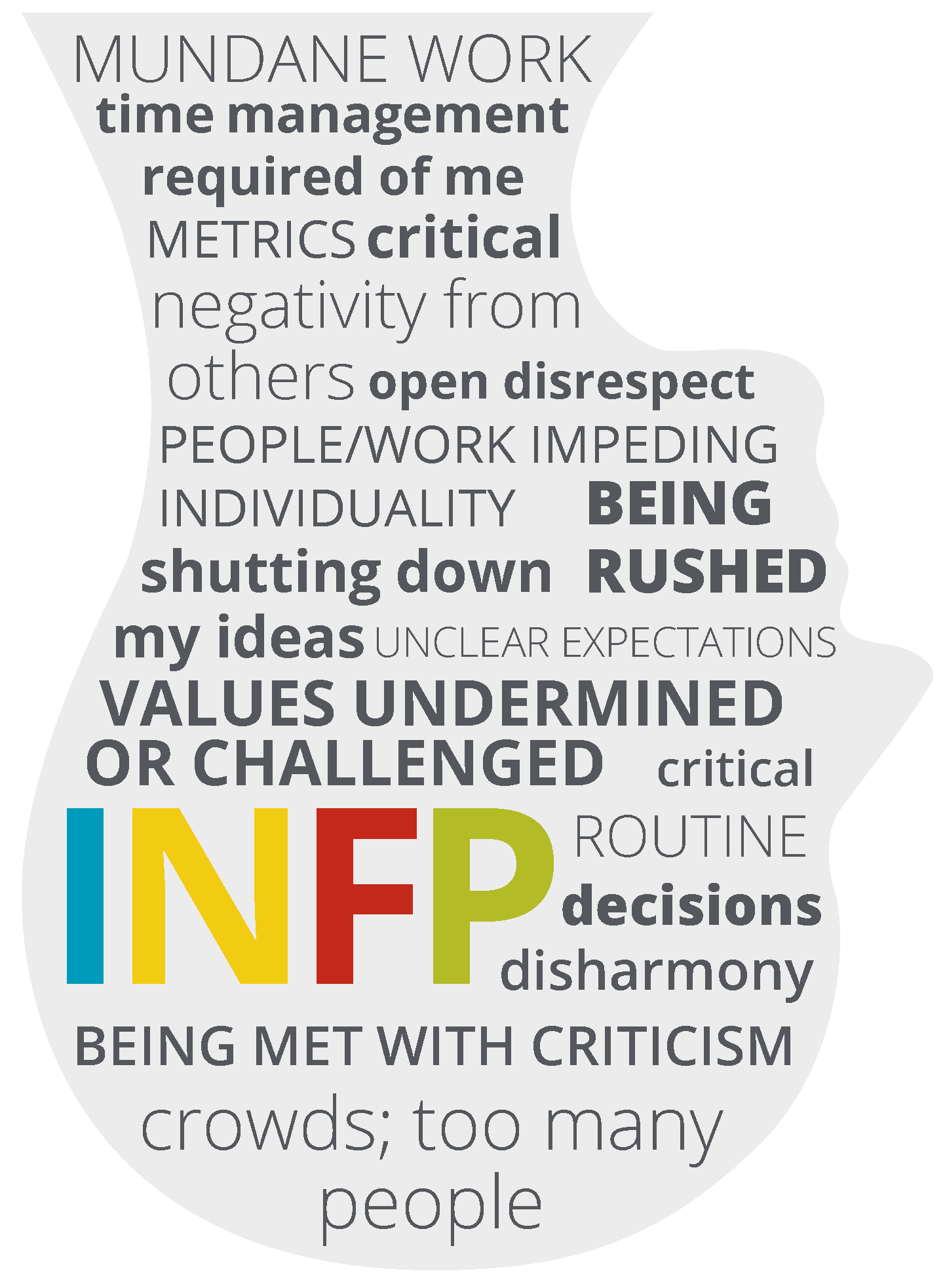
When they’re stressed, people with INFP preferences are likely to:
Have difficulty communicating their thoughts or feelings to others.
Withdraw emotionally.
Doubt their own abilities.

At times of extreme or prolonged stress, they may start to behave uncharacteristically. They might:
Become overcritical of themselves and others.
Communicate in an aggressive, cynical, or judgmental way without considering the impact this has on others.
Become self-indulgent or self-pitying.
To help someone with INFP preferences recover from stress, encourage them to set achievable goals, accept compromise where necessary, and say no to new tasks or responsibilities until they feel calm again.
Managing stress

If you have INFP preferences, try these simple strategies to balance your feelings during times of stress:
If you feel hurt by something someone else has said or done, take a moment to consider if they actually meant to hurt you. The other person might be under stress or in a rush. They most likely didn’t mean to upset you.
Create a schedule for yourself and share it with your team. This will let your colleagues know your preferred schedule and personal boundaries.
Bring headphones to work and listen to relaxing music. If you work in a loud environment, this can help you to avoid loud noises and other interruptions while still being physically present and available.
How does INFP compare?
See how INFP relates to any other type side by side.
Compare INFP