Insightful visionary
Overview
People with INFJ preferences tend to be compassionate and creative. They enjoy helping other people grow and develop. They’re typically idealistic and love to use their imaginations at every opportunity. People often see them as sensitive and reserved.
Characteristics
Strengths

Meaning and connections are important to people with INFJ preferences. They usually want to have purpose in their work, relationships, and even their possessions!
Here are some common characteristics of people with INFJ preferences:
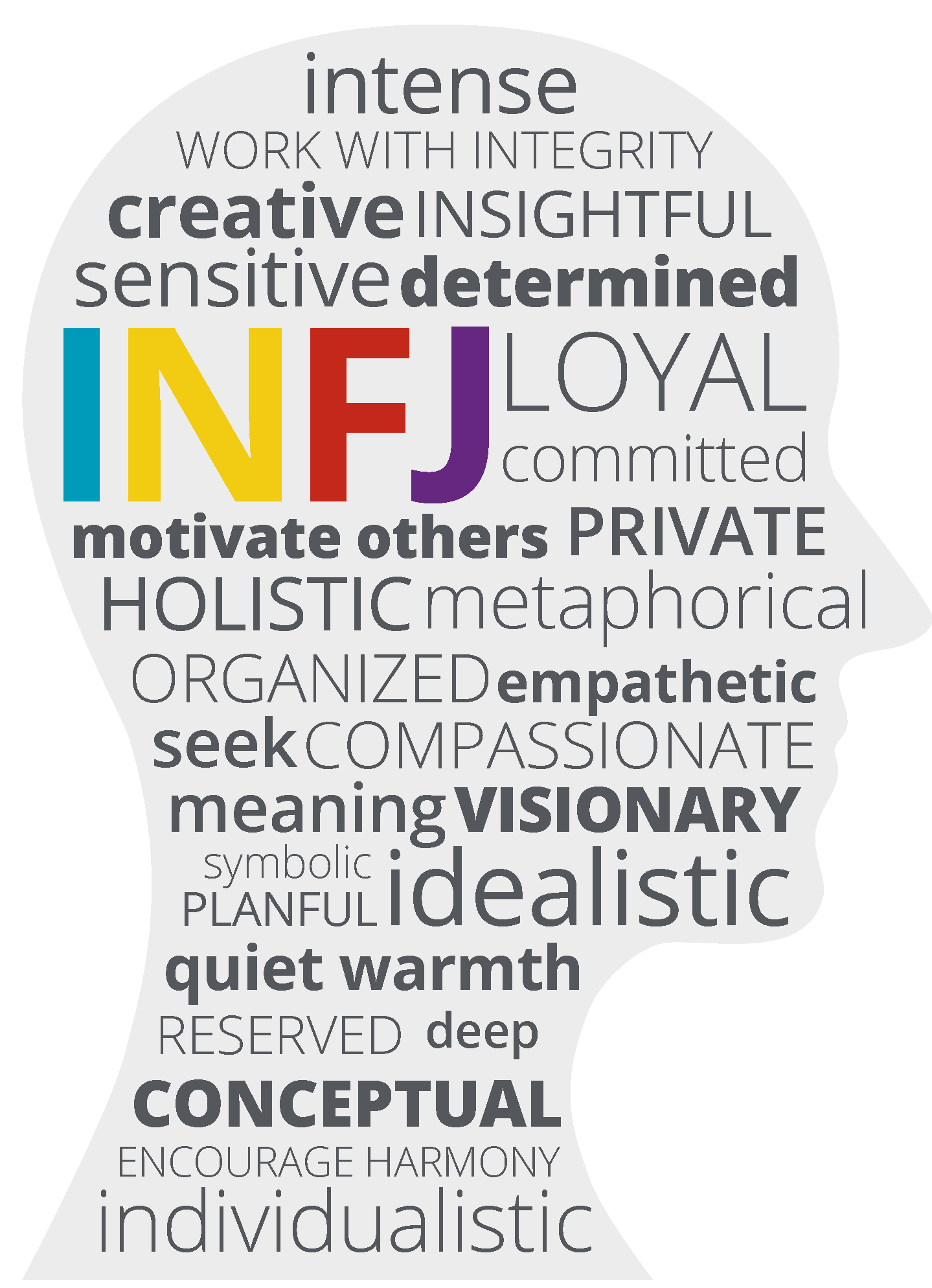
Compassionate—They treat people with kindness and sensitivity.
Committed—They look for work and relationships they can dedicate themselves to.

Empathetic—Their understanding of other people’s feelings and motivations helps them to predict how others might react to the future.
Values-driven—They behave in a way that’s aligned with their values
Visionary—They’re guided by a clear internal picture of how things could be in the future.
Interesting facts about INFJs

INFJs may seem shy at first, but they usually have a lot going on beneath the surface. They tend to follow their hunches to determine what to do next. However, they’ll usually share their vision for the future only with the people they’re closest to.
Hobbies and interests

People with INFJ preferences tend to like activities they can do alone. They don’t usually have much energy for physical activities or sports.
They’ll probably prefer to socialize in small, intimate groups rather than going to parties or other large gatherings.

They may enjoy:
Reading or writing.
Playing a musical instrument.
Composing or listening to music.
Cycling, yoga, or Pilates.
Stretches

Stretches are potential development areas we might miss based on our personality preferences. Awareness of possible stretches or vulnerabilities can be helpful for personal or professional development and improve our relationships with others.

Tap a development area for quick tips from our MBTI<sup>®</sup> experts.
People with INFJ preferences might:
Find their ideas overlooked or underestimated because of their reserved nature.

People with INFJ preferences may find it helpful to make notes or plan what they’re going to say before sharing with others—especially in a group discussion or meeting. This may help them structure their ideas and prepare for questions from others.
Have difficulty giving or receiving negative feedback.

Know someone like this? You can help them by providing feedback, even if it doesn’t feel easy or comfortable at first. Encourage them to consider feedback on their own before they try to respond. What does the feedback really mean?
Set unachievable standards and unrealistic expectations for themselves and others.

People with INFJ preferences may find it helpful to discuss their standards and expectations with others—especially in teamwork or project scenarios where their expectations could impact their relationships with others.
Stubbornly hold on to their vision and fail to notice what’s going on around them.

Know someone who does this? Meditation or other mindfulness techniques may help them to pause and notice the world around them.
How others see you

At your best, others tend to notice your commitment to people. However, you don’t often share your thoughts with others unless you feel close to them. As a result, you may be seen as private or people may not understand you.

Others usually see your:
Creative insights
Caring nature
Thoughtfulness
You tend to hold back from sharing your opinions with others. If your values are challenged, people are likely to see a more assertive side of you that they may find surprising.
Careers

People with INFJ preferences are generally compassionate, innovative, insightful, and future-focused.
They’ll usually:
Find creative development opportunities for themselves and others.
Want everyone to be treated kindly and considerately.
Encourage others to work together to achieve long-term goals in line with their values.
Try to build strong and authentic relationships with their colleagues.
They tend to work best when they know exactly what’s expected of them and have the opportunity to explore connections that meet their values. A calm and respectful working environment is likely to bring out the best in them.
Popular occupations

Popular occupations for people with INFJ preferences include:
Teacher
Art therapist
Counselor
Social worker
Librarian
Writer
Trainer
Psychiatrist
Veterinarian
Childcare provider
Nonprofit
Environmental justice
Career trends

People with INFJ preferences like to make a difference. While INFJs tend to prefer thoughtful work that lets them make a difference behind the scenes, they also want to see that the work they’re doing is improving things for the people in their community.
Leadership style

In leadership or management roles, people with INFJ preferences are likely to:
Focus on what’s best for people and the organization.
Define a strategy and follow it carefully.
Inspire and motivate others.
Earn loyalty, rather than demanding it.
Approach to teamwork

INFJs enjoy collaborating as part of a team. They try to keep teamwork as democratic as possible and to hear everyone’s input during problem-solving or decision-making. INFJs are at their best when they’re working with a group of like-minded colleagues who are equally passionate about an issue.
Problem-solving approach
When trying to solve a problem, people with INFJ preferences will usually focus their energy on:
Creating and exploring possible solutions.
Considering the effects their actions might have on the people involved.
They don’t usually spend as much time or energy:
Examining the logical consequences of their actions.
Gathering facts and information.
Preferred working environment

People with INFJ preferences tend to value:
People-focused organizations and colleagues who share their values.
An organized approach to tasks, with opportunities for creativity.
Harmony and consideration for others.
A calm, quiet office space.
Remote working tips
Remote working tips for people with INFJ preferences:
Give yourself time and space to think through the implications of your ideas for yourself and others.
Don’t forget to share your ideas with others. It’s easy to forget when you’re working remotely!
Create a dedicated working area. Make sure it can be kept quiet and free from interruptions when you need it to be.
Use video and other virtual communication apps to keep in touch with others. Schedule time to connect with people into your working day.
If you feel you can’t respond quickly to what seems like an urgent email or IM, send a holding response and explain that you need more time.
Relationships

People with INFJ preferences tend to strive for closeness in their relationships with friends, family, and romantic partners. They like to have deep conversations and share their hopes and dreams with others, and they expect the same from their closest confidants.
INFJs also tend to be intuitive and naturally empathetic. This means they’re likely to know what other people need at just the right moment.
Conflict

People with INFJ preferences generally try to avoid conflict. However, they often understand that conflict is a normal part of life and so don’t shy away from a conflict once it arises. Instead, they try to use conflict to strengthen their bonds with friends and partners.
During a conflict, INFJs may worry so much about making sure the other person is OK that they don’t share their own views as directly as maybe they should. Because they like interacting with a range of people from different backgrounds, they may also unknowingly invite conflict between others who aren’t quite so open-minded. If this happens, they’ll likely need to intervene and smooth things over.
If you have INFJ preferences, you can minimize conflict in your relationships by:
Speaking up about the things that bother you, rather than worrying about the other person’s feelings. Remember, to truly become closer with other people, it’s important that they know where you stand.
Allowing other people to become closer friends over time rather than forcing unnatural friendships and interactions.
Taking a step back and trying to diffuse the situation, rather than forcing other people to talk when they’re tired or emotionally drained.
Friendship

People with INFJ preferences are kind, gentle, and thoughtful friends. They often know what their friends are feeling before they even say a word. They like to spend time with their friends talking about feelings and discussing the meaning of life.
INFJs sometimes overextend themselves to friends. It can be helpful for people with INFJ preferences to remember to say no and set boundaries from time to time. This will allow them the time and space they need to rest and recharge.
Love

People with INFJ preferences love to be in love. They tend to be as idealistic in love as they are in their careers. They’re always looking for ways to make their relationships deeper and more meaningful.
They’re also incredibly observant partners who always seem to know what the other person needs. While it tends to take a long time for INFJs to open up and let others in, they’ll probably feel more comfortable with a partner who shares the same morals and values.
Parenting

The MBTI framework can be very helpful when it comes to raising children. Knowledge of your own communication habits, stress triggers, and preferences often makes parenting easier. By integrating an awareness of differences into family life, the whole family can benefit from these insights.
INFJs are open-minded parents who intuitively know what their children need. They let children be their honest selves and encourage them to accept others with kindness and love.
Parents with INFJ preferences probably feel stressed when they give too much time to their children and end up spreading themselves thin.
If you have INFJ preferences and you think your child shares your Intuition and Feeling preferences, this can help you to understand how your child takes in information and makes decisions—both of which are important for how you communicate as a parent. If you think your child’s preferences are different than yours, self-awareness will help you to change your communication and parenting style to better suit those preferences.
Stress and resilience

Different people tend to get stressed by different situations. We also tend to react to stress differently.
Here are some of the things people with INFJ preferences may find stressful:
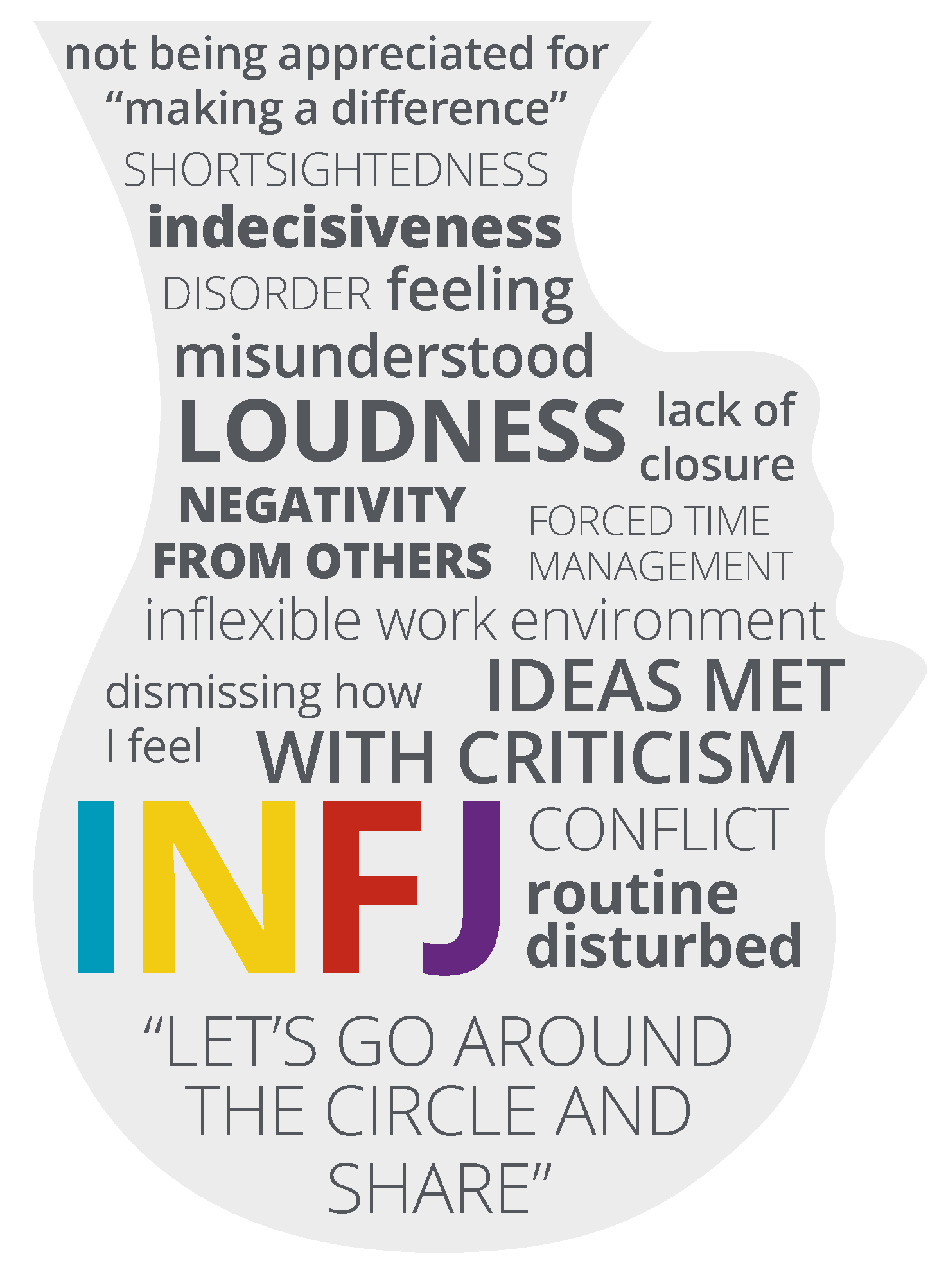
When they’re stressed, people with INFJ preferences are likely to:
Gather too much information or explore too many ideas.
Withdraw emotionally or feel like everyone is against them.
Become stubborn or narrow-minded.

At times of extreme or prolonged stress, they may start to behave uncharacteristically. They might:
Fixate on information they would normally consider irrelevant.
Overindulge in sensory activities such as eating, cleaning, or exercise.
Become angry or frustrated with the world around them.
To help someone with INFJ preferences recover from stress, encourage them to spend some time alone to recharge or focus on a task or hobby they enjoy.
Managing stress

If you have INFJ preferences, try these simple strategies to balance your feelings during times of stress:
If you feel hurt by something someone else has said or done, take a moment to consider if they actually meant to hurt you. The other person might be under stress or in a rush. They most likely didn’t mean to upset you.
Create a schedule for yourself and share it with your team. This will let your colleagues know your preferred schedule and personal boundaries.
Bring headphones to work and listen to relaxing music. If you work in a loud environment, this can help you to avoid loud noises and other interruptions while still being physically present and available.
How does INFJ compare?
See how INFJ relates to any other type side by side.
Compare INFJ