Efficient organizer
Overview
People with ESTJ preferences usually like to organize people and resources to achieve their goals. They tend to value order, structure, and getting things done. They generally prefer proven procedures to new ways of doing things, and are great at seeing problems that others may have missed.
Characteristics
Strengths

People with ESTJ preferences tend to have high expectations for themselves and others. They usually take their responsibilities seriously and expect others to do the same. They’re likely to value competence, efficiency, and results.
Here are some common characteristics of people with ESTJ preferences:
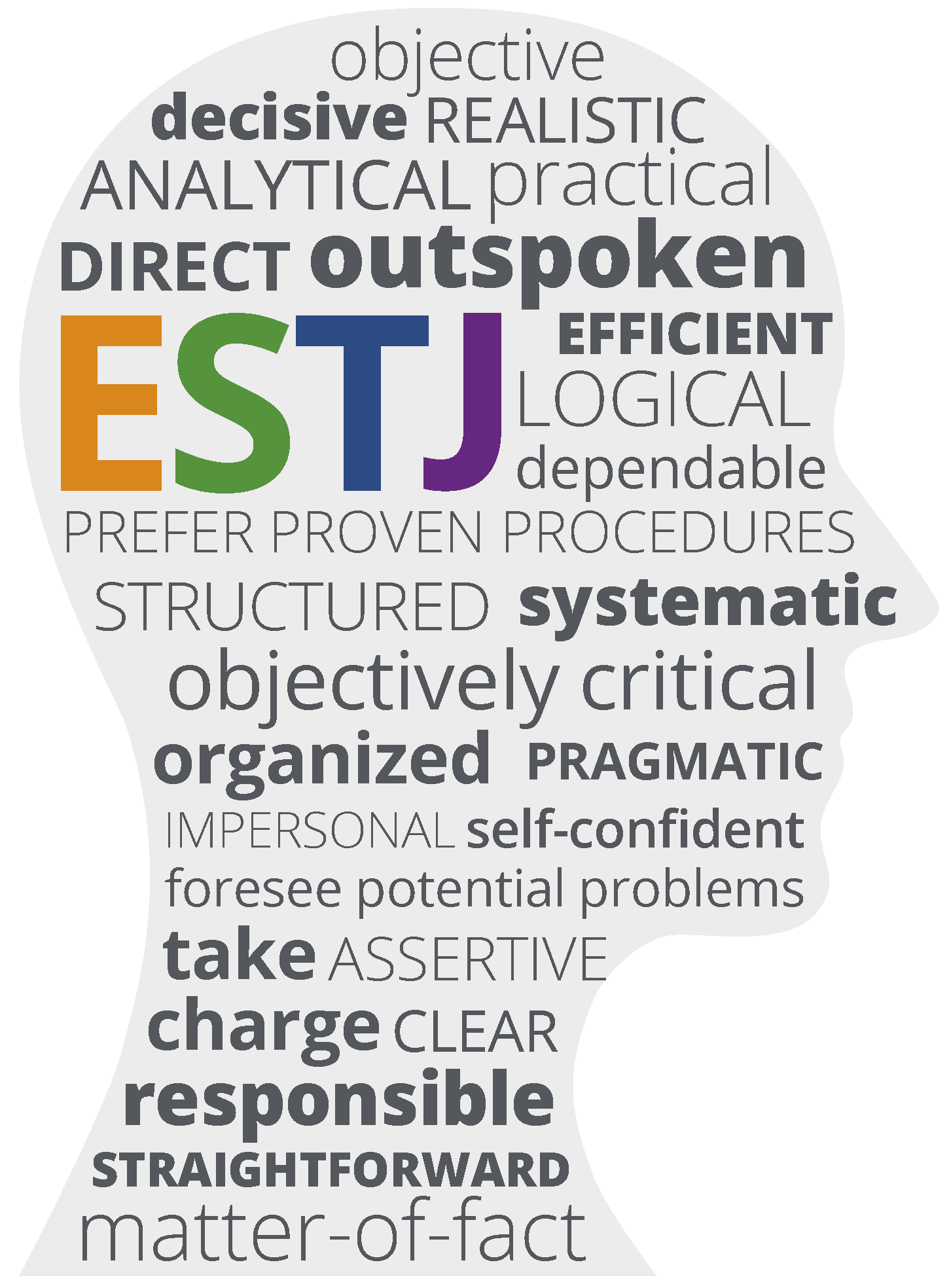
Efficient—They get things done without wasting time or energy.
Practical—They approach problems objectively, using common sense to focus on what’s achievable.
Decisive—They make logical decisions and take action quickly.

Responsible—They follow rules and procedures to make sure they meet deadlines.
Straightforward—They communicate clearly and honestly. They’re direct, matter-of-fact, and consistent.
Interesting facts about ESTJs

People with ESTJ preferences use their Thinking preference in the outside world. They’re great at communicating how best to achieve shared goals or complete a task. They’re also highly analytical and goal oriented. They often enjoy using data to support their jobs, hobbies, and anything else they do.
Hobbies and interests

People with ESTJ preferences are often productive in their spare time. They may enjoy organizing or running events for others. They’re probably not interested in physical activity for its own sake, but may like structured sports or home improvement projects.

They may enjoy:
Team games, quizzes, or puzzles that test their knowledge.
Building or making things.
Supporting the local community.
Skilled individual sports, such as golf or tennis.
Stretches

Stretches are potential development areas we might miss based on our personality preferences. Awareness of possible stretches or vulnerabilities can be helpful for personal or professional development and improve our relationships with others.

Tap a development area for quick tips from our MBTI<sup>®</sup> experts.
People with ESTJ preferences might:
Make decisions too quickly and put pressure on others to do the same.

Know someone who does this? Try suggesting a results-focused approach. Although others may approach a decision differently and reach a decision more slowly, they might get similar results.
Avoid change or innovation when they believe current processes are working.

Know someone who does this? Try asking questions to encourage them to think about the future.
For example, what would things look like if a process were to change? What are the possible benefits of taking a new approach?
Lists, diagrams, or discussions may also help someone with ESTJ preferences organize their thoughts.
Forget to ask other people how they are or take the time to chat.

You can often help someone with ESTJ preferences remember to chat by asking specific questions about subjects that interest them or projects they’re involved in.
Be impatient with people who work differently, seem inefficient or disorganized, or spend too much time exploring ideas.

Know someone like this? Meditation or mindfulness techniques may help them to practice having more patience with the world around them.
Try to encourage them to make an effort to understand other people’s perspectives and ways of doing things. It may also help to remind them that there are some things they can’t control. Although other people approach a task differently, they may get similar results.
How others see you

At your best, people are likely to see you as confident and direct—someone who takes charge of whatever needs to get done.

Others usually see your:
Organization
Drive to get things done
Objectivity
You’re likely to have strong views about the best way to achieve something, which may come across forcefully to others.
You’re generally seen as sociable and tend to be supportive of your family, friends, and your local community. You treat your relationships and your role in the family seriously and conscientiously.
Careers

At work, people with ESTJ preferences tend to be logical, systematic, and decisive.

They’ll usually:
Focus on practical uses of information and experience to solve problems in the world around them—if something isn’t working, they’ll quickly develop a plan and fix it.
Try to create order from the events, people, and tasks around them.
Prefer to plan and organize their work to complete tasks as efficiently as possible.
Have little or no time for confusion or wasted effort.
They tend to work best when they know what’s expected of them. They like roles and responsibilities to be clear. They work well in an environment that allows them to develop logical and efficient plans, complete tasks competently, and manage others to achieve their goals.
Popular occupations

Popular occupations for people with ESTJ preferences include:
Recruitment
Law enforcement
Business management
CEO
Law
Organizational psychology
Entrepreneur
Accounting
Finance
Coach
Career trends

Whether they’re in leadership roles or not, ESTJs do best in jobs where they can manage people, structures, or systems. With their analytical minds and interest in numbers, they tend to do well in finance, business, or law careers where there are straightforward answers and “right” ways of doing things.
Leadership style

In leadership or management roles, people with ESTJ preferences are likely to:
Take charge quickly.
Apply and adapt past experience to solve problems.
Make decisions and implement them efficiently.
Respect traditional leadership roles and hierarchical structures.
Approach to teamwork

ESTJs often prefer to lead a team than join one. If they do find themselves part of a team where everyone is at the same level, they may naturally gravitate to a self-determined role, managing tasks and creating schedules for the group.
This isn’t necessarily a bad thing, and can often help the team get the job done. However, ESTJs may need to keep an eye on their impulse to tell others what to do. Sometimes, that’s OK, and sometimes they may need to stay in their own lane a bit more.
Problem-solving approach

When trying to solve a problem, people with ESTJ preferences will usually focus their energy on:
Examining the logical consequences of their actions.
Gathering as many facts and as much information as possible.
They don’t usually spend as much time or energy:
Looking into other possible solutions.
Considering the feelings of the people involved.
Preferred working environment

At work, people with ESTJ preferences tend to value:
Hardworking colleagues focused on getting the job done properly.
A goal-oriented and efficient approach to tasks.
Organization, structure, and stability.
Opportunities for teamwork.
Remote working tips
Remote working tips for people with ESTJ preferences:
Start your day by planning and prioritizing the tasks ahead.
Use video in online meetings. Try to be aware of how people react to what you’re saying.
Be tactful in your online communications and try to avoid being too directive. Remember to check emails or messages before you send them—this is particularly important if you’re stressed or in a hurry.
Have a dedicated home office or working area. If it becomes too quiet, take a break, go for a walk, or connect with family and friends. Working from home means you’re allowed to be flexible!
Remember that your family, friends, and colleagues may sometimes need emotional support. They might not want you to go straight into problem-solving mode.
Relationships

People with ESTJ preferences tend to have strong personalities. They often try to protect the people they care about. Laser-focused at work, they’re generally just as passionate about their home and family life, and may even apply the same precise leadership style in making sure that their relationships are doing well.
Conflict

In conflict, ESTJs tend to dominate other people with their thoughts and opinions. In fact, this could be one way that ESTJs cause conflict in the first place! Because they’re so passionate about doing things a certain way, they can sometimes alienate other people with differing viewpoints.
If other people are vague in their communication or take too long to make a decision, this will likely cause conflict for ESTJs.
If you have ESTJ preferences, you can minimize conflict in your relationships by:
Taking the time to listen to and understand the other person’s point of view. You may think your own view is the right one, but it’s important to listen to the people you care about.
Remembering that other people may have an emotional investment in their ideas or opinions. While you’re likely driven by sound logic, others may be motivated by passion or creativity. Rather than making them feel inferior, try to celebrate their talents and make room for them.
Giving others some time and space to cool off. You’ll probably want to squash conflict to get back on track, but other people may need time to get over an argument. Remember to allow them this “cooling-off period” before resolving a conflict.
Friendship

ESTJs are bold and outgoing friends. They truly love being around other people. They’re often up for a lively debate or an exciting outing with friends—though they’ll likely want to be the one to plan everything!
They can strengthen their friendships by making it clear that they’re listening to your friends, and taking steps to relax their usual organizational tendencies.
Love

People with ESTJ preferences tend to take on leadership roles, even in their romantic relationships. This works well with a more relaxed partner, but may lead to conflict if their partner also wants to control everything in the relationship. ESTJs tend to do best when they can exert some control over day-to-day details to show their partner that they care.
ESTJs are always working to make their relationships better, which often results in them being attentive and dedicated partners. They may need reminders to pause from time to time, but their partners will usually feel loved and appreciated.
Parenting

The MBTI framework can be very helpful when it comes to raising children. Knowledge of your own communication habits, stress triggers, and preferences often makes parenting easier. By integrating an awareness of differences into family life, the whole family can benefit from these insights.
ESTJs are likely devoted and driven parents who want what’s best for their families. They may set high expectations for their children—generally, though, they do this only because they want their children to have the best in life and meet their goals as they grow older.
Parents with ESTJ preferences will likely feel stressed when their children throw tantrums or lose interest in plans, hobbies, or activities they had previously committed to.
If you have ESTJ preferences and you think your child shares your Sensing and Thinking preferences, this can help you to understand how your child takes in information and makes decisions—both of which are important for how you communicate as a parent. If you think your child’s preferences are different than yours, self-awareness will help you to change your communication and parenting style to better suit those preferences.
Stress and resilience

Different people tend to get stressed by different situations. We also tend to react to stress differently.
Here are some of the things people with ESTJ preferences may find stressful:
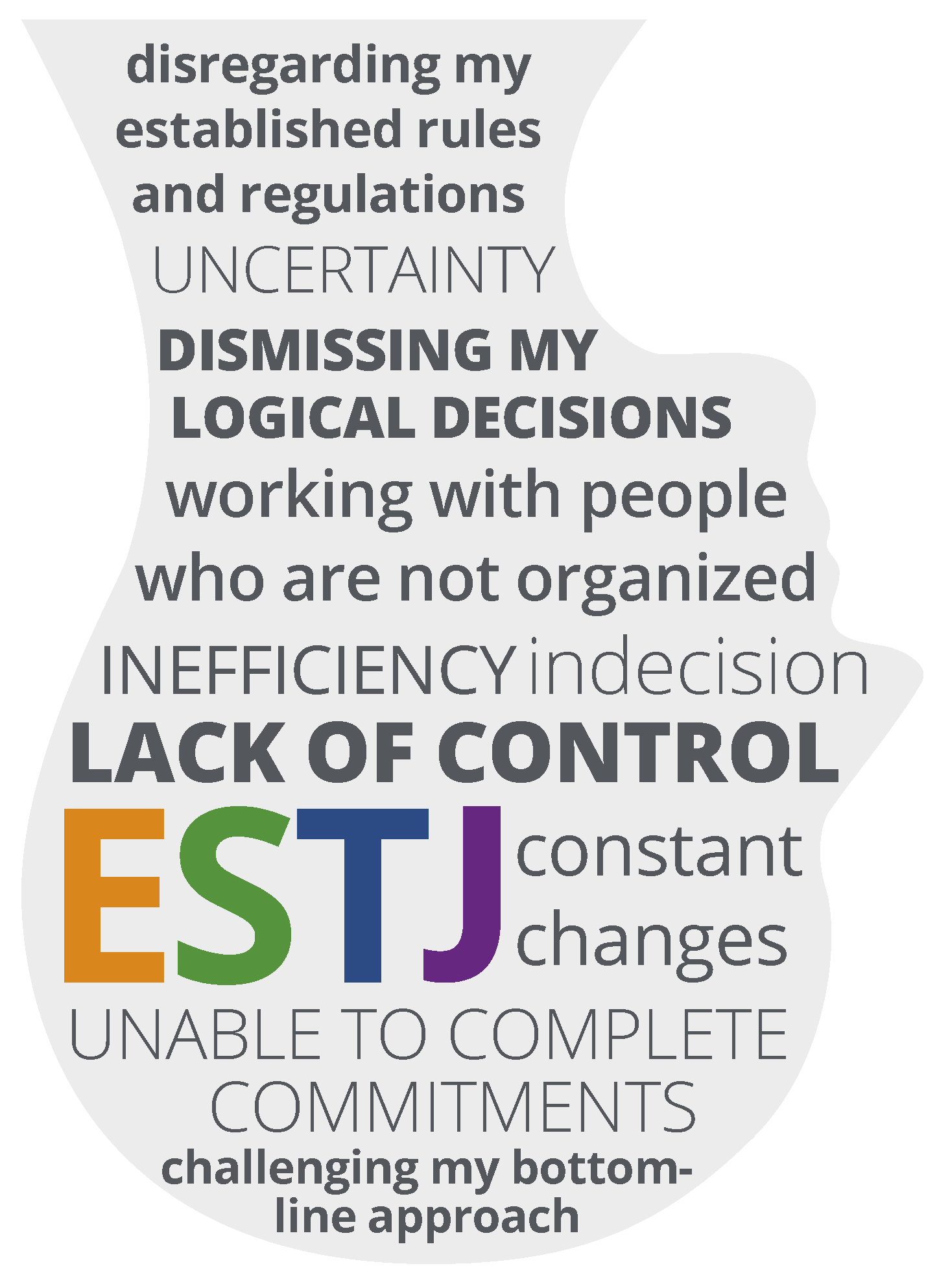
When they’re stressed, people with ESTJ preferences are likely to:
Become stubborn and inflexible.
Appear bossy or arrogant.
Become impatient or critical of others.

At times of extreme or prolonged stress, they may start to behave uncharacteristically. They might:
Feel alone or unappreciated.
Become oversensitive to what other people think or say.
Have difficulty communicating their feelings to others.
To help someone with ESTJ preferences recover from stress, listen to them without judgment and encourage them to focus on what’s achievable.
Managing stress

If you have ESTJ preferences, try these simple strategies to balance your feelings during times of stress:
Create your own schedule or workflow system instead of trying to force one on others. If that’s how you work best, remember that you can only control your own actions.
Remind yourself that people have different talents. Try to set people up for success rather than failure.
Create a relaxing, clutter-free workspace away from stressful distractions.
Practice patience with people who move at a different pace than you. These people might be more cautious or thoughtful than you are. Their slower pace doesn’t mean they’re incompetent.
How does ESTJ compare?
See how ESTJ relates to any other type side by side.
Compare ESTJ