Enthusiastic improviser
Overview
People with ESFP preferences tend to be flexible, friendly, and expressive. They often enjoy experiencing new things and being around other people. They’re keen observers and are generally optimistic, accepting a wide range of behavior and supporting others with a realistic attitude.
Characteristics
Strengths

Harmony is often very important to people with ESFP preferences. They want to enjoy life and have fun with the people around them. They tend to be interested in other people but may feel a particular connection with children and animals.
Here are some common characteristics of people with ESFP preferences:
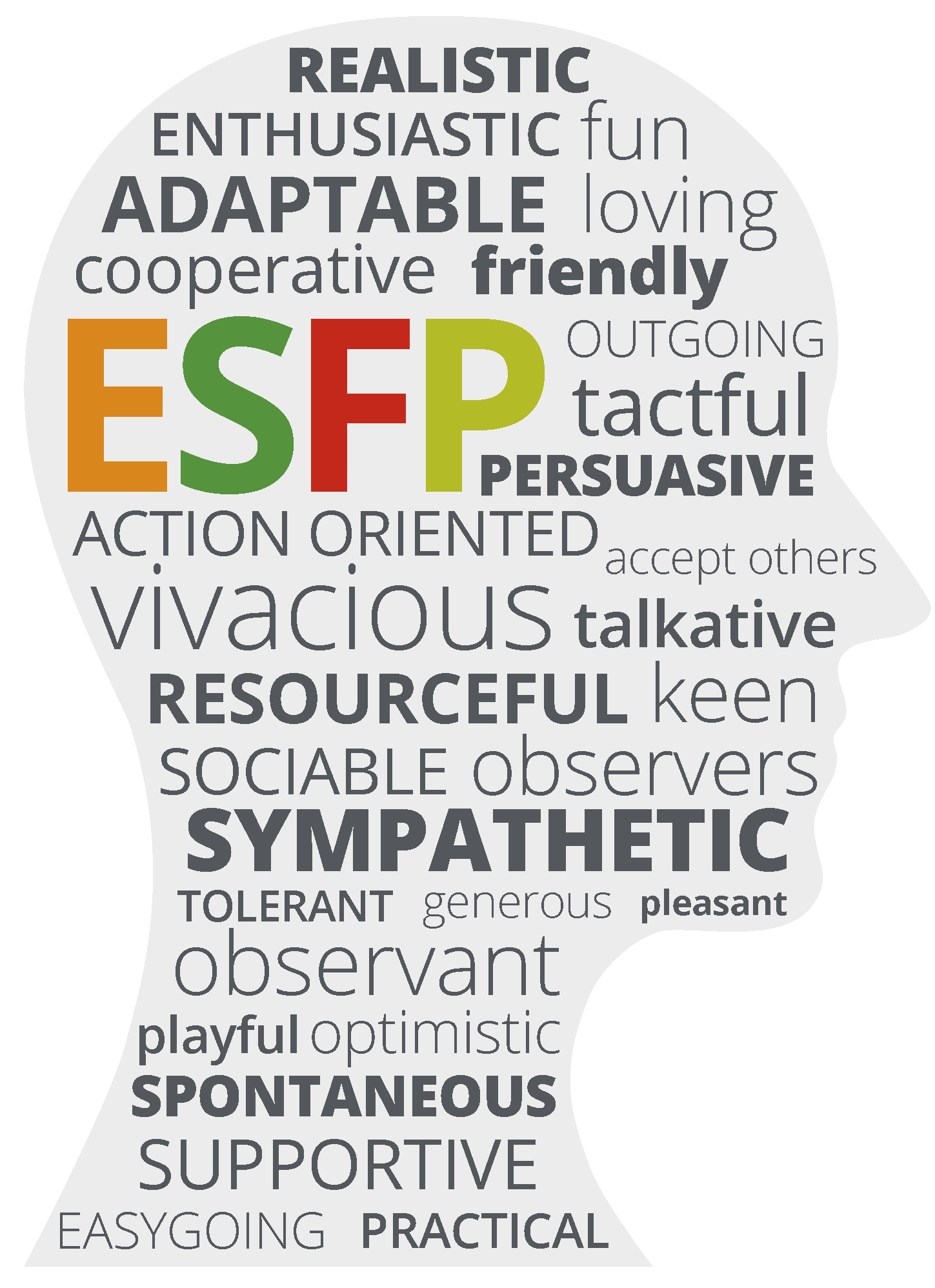
Easygoing—They’re tolerant of others and tend not to worry about future events or situations that may never happen.
Energetic—They like to be active and tend to get bored when life slows down.
Observant—They notice what’s happening around them, particularly what’s going on with people and relationships.

Realistic—They respond to situations in a practical way and focus on what’s achievable. They’re usually calm and quick to act in a crisis.
Resourceful—They notice what needs to be done and involve other people to make things happen.
Interesting facts about ESFPs

ESFPs tend to enjoy life. They don’t take themselves too seriously. They can easily evaluate situations around them to determine in real time what others may need. To many of their friends, families, and colleagues, ESFPs are the life of the party!
Hobbies and interests

People with ESFP preferences tend to be outgoing, friendly, and sociable. They often interact with others easily. They probably enjoy big parties or social gatherings and may be quick to join in any group activity that looks like fun.

They may enjoy:
Cooking and exploring new flavors.
Noncompetitive sports or other outdoor activities.
Working out with Zumba or fitness classes.
Craft or home improvement projects.
Stretches

Stretches are potential development areas we might miss based on our personality preferences. Awareness of possible stretches or vulnerabilities can be helpful for personal or professional development and improve our relationships with others.

Tap a development area for quick tips from our MBTI<sup>®</sup> experts.
People with ESFP preferences might:
Have difficulty being objective when other people’s feelings are involved.

Know someone who does this? It may help them to talk to people who are likely to be affected by their decisions. Other people don’t always feel the way we expect them to!
Get bored or distracted easily and lose focus on what’s important.

People with ESFP preferences may find it helpful to plan ahead when they need to concentrate or have a deadline to meet. They may need to focus on how they balance work and social time.
Move on to new ideas or projects without completing what they’ve started.

Project or time management tools may help people with ESFP preferences meet their goals. They may also find it helpful to keep a to-do list or add tasks to an online calendar.
Become impatient with people who want to think decisions through thoroughly before moving on.

Know someone who does this? Try suggesting a results-focused approach. Although other people may take longer to commit to a decision, they may come to a similar—or maybe even better—conclusion.
How others see you

At your best, people are likely to see the energy and positive attitude you bring to your work.

Other usually see your:
Practical focus
Flexibility
Tolerance of others
People tend to notice how much you enjoy life. Your fun-loving, enthusiastic approach may lead people to overlook your strong values and desire for harmony.
Careers

People with ESFP preferences tend to be friendly, fun-loving, and outgoing.

They’ll usually:
Care for other people by helping them in practical ways.
Adapt easily and pragmatically to new people, environments, and situations.
Learn best by discussing or trying out new skills with others.
Trust their observations of what’s going on around them, especially their insights into people and relationships.
They’re at their best when working collaboratively with others to make things happen. They generally prefer to take a realistic, commonsense approach to the world around them.
Popular occupations

Popular occupations for people with ESFP preferences include:
Activities director
Employee engagement
Teacher
Customer service
Fashion consultant
Emergency medical technician (EMT)
Police officer
Events coordinator
Real estate
Parks and recreation
Career trends

ESFPs tend to change career paths several times in their lives—which suits them just fine. They love to try new things, and while they put a lot of pressure on themselves to make others happy, they will often take their own, individual approach to their own lives.
ESFPs are often happiest in careers that allow them to help others while also learning new things. This might be caring for children or the elderly, events or activity planning, or careers in medicine.
Leadership style

In leadership or management roles, people with ESFP preferences are likely to:
Lead by encouraging collaboration, goodwill, and teamwork.
Focus on immediate problems and solutions to make things happen.
Prefer to manage projects in the development or start-up phase.
Motivate others to work together effectively.
Approach to teamwork

ESFPs are the ultimate team players. They thrive on other people’s energy and love to learn new things from, or with, interesting people. They are often seen as easygoing and fun, which can provide some relief for other, more serious people on the team.
Although they don’t tend to stick to a rigid schedule, ESFPs are great at providing smart and practical solutions to problems, and they work hard when they know it’s for the common good.
Problem-solving approach

When trying to solve a problem, people with ESFP preferences will usually focus their energy on:
Gathering as many facts and as much information as possible.
Considering the effects their actions might have on the people involved.
They don’t usually spend as much time or energy:
Examining the logical consequences of their actions.
Looking into other possible solutions.
Preferred working environment

People with ESFP preferences tend to value:
Energetic, action-oriented colleagues.
A lively, fast-paced environment.
Projects and tasks that allow them to work with others.
An attractive, colorful, and social workplace.
Remote working tips
Remote working tips for people with ESFP preferences:
Make the job interesting by involving and working with others.
Fill your day with a variety of people and tasks.
Set time aside each week when you won’t allow yourself to be distracted by people or conversation. Use this time to concentrate on the tasks you need to get done.
Try not to snack too much, overindulge in treats, or spend too long binge-watching TV streaming services.
In your leisure time, go dancing, play a team sport, or take part in other physically energetic activities involving people if you can.
Relationships

People with ESFP preferences may take a while to really get to know.
As friends or romantic partners, they’re often seen as spontaneous and exciting. They care deeply about what others think and they want to make people happy. But they also tend to have a lot of people in their lives and therefore need to spread their time around. This may cause stress for others if friends or family members feel neglected.
The right friends and partners for ESFPs tend to understand their need to socialize and try new things, and as a result they appreciate the time they spend together even more.
Conflict

ESFPs are great at minimizing conflict. The combination of their Feeling and Perceiving preferences mean they tend to feel things deeply and may even internalize other people’s pain. This makes them want to resolve a conflict right away.
With their warm and understanding approach, ESFPs are often able to calm others down. This may help them get to the underlying cause of the conflict. However, some people may feel that ESFPs aren’t truly listening to their concerns, which could lead to frustration and more conflict.
If you have ESFP preferences, you can minimize conflict in your relationships by:
Staying focused long enough to hear both sides of the conflict, even if it’s difficult to understand the cause.
Reminding yourself that everything can’t be fun all the time. Sometimes, you need to face serious issues head-on.
Gauging the situation to see what others might need. You can then provide your signature blend of warmth and compassion—if that’s what the situation calls for.
Friendship

As friends, ESFPs are fun, spontaneous, and loyal. Others often appreciate their clear enjoyment of life’s simple pleasures. Routine activities such as going on a road trip or having dinner at a local restaurant are more exciting with an ESFP in the group!
ESFPs tend to have lots of friends from different groups. They may need to work hard to make sure each friend feels important; otherwise, they may risk upsetting the more sensitive of their friends.
Love

In romantic relationships, people with ESFP preferences are incredibly affectionate and loving. However, they aren’t the kinds of people to jump straight into a committed relationship. They enjoy getting to know lots of different people and likely don’t want to be tied down to any one situation right away, which could make them unwilling to commit to a serious relationship.
Once they find the right person, ESFPs are loyal and dedicated. The right partner for an ESFP will respect their boundaries, be ready for lots of spontaneous adventures, and keep them grounded when they need stability.
Parenting

The MBTI framework can be very helpful when it comes to raising children. Knowledge of your own communication habits, stress triggers, and preferences often makes parenting easier. By integrating an awareness of differences into family life, the whole family can benefit from these insights.
Parents with ESFP preferences tend to be fun and easygoing. They have an appreciation for life that likely carries over to their children. They genuinely enjoy playing with their children, and their spontaneous nature will often provide lots of long-lasting memories for them.
ESFP parents are likely to feel stressed when their children have extreme emotions that they don’t know how to handle. They may feel stressed or anxious if they’re asked to commit to playdates or rigorous sports schedules for their children.
If you have ESFP preferences and you think your child shares your Sensing and Feeling preferences, this can help you to understand how your child takes in information and makes decisions—both of which are important for how you communicate as a parent. If you think your child’s preferences are different than yours, self-awareness will help you to change your communication and parenting style to better suit those preferences.
Stress and resilience

Different people tend to get stressed by different situations. We also tend to react to stress differently.
Here are some of the things people with ESFP preferences may find stressful:
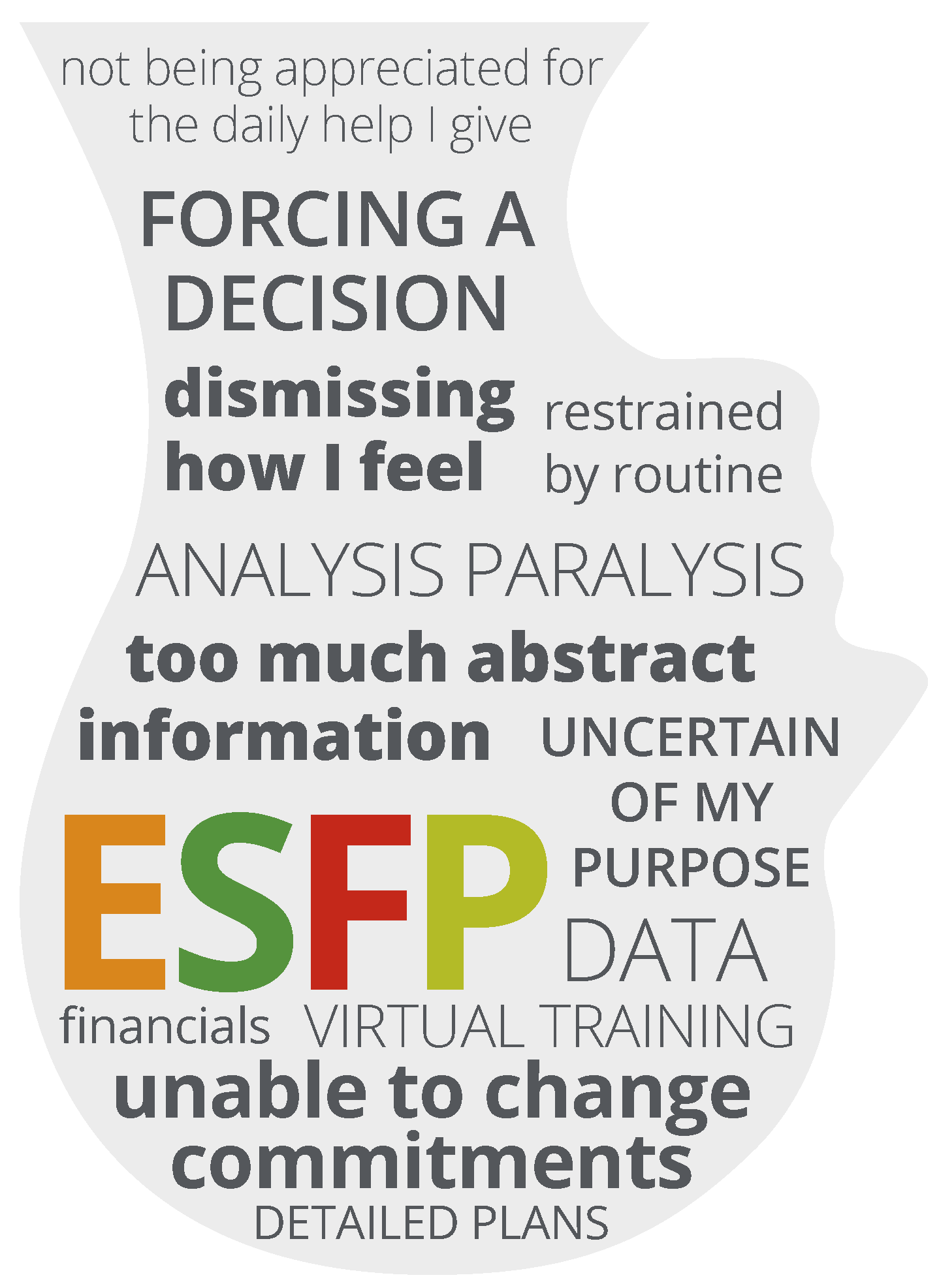
When they’re stressed, people with ESFP preferences are likely to:
Work harder or put in longer hours.
Overindulge in activities they usually enjoy, such as eating or exercise.
Fixate on things they wouldn’t normally see as important.

At times of extreme or prolonged stress, they may start to behave uncharacteristically. They might:
Withdraw from others.
Catastrophize—imagining increasingly negative possibilities for the future.
Become anxious or paranoid.
To help someone with ESFP preferences recover from stress, encourage them to do something active that they enjoy. Try to stay positive—you may be able to help them plan their next steps.
Managing stress

If you have ESFP preferences, try these simple strategies to balance your feelings during times of stress:
Take the time to consider what you want out of life and the steps it will take to get there. While you’re typically noncommittal, you’ll probably feel stressed if you don’t have an overarching purpose in life. It helps to keep striving toward a larger goal.
Set a schedule. To avoid disappointing others or overexerting yourself, create a rough schedule that allows for plenty of free time.
Don’t commit to plans you can’t keep. It’s OK to say no to plans you’re not fully invested in. It’s better to avoid activities you don’t enjoy rather than cancelling at the last minute.
How does ESFP compare?
See how ESFP relates to any other type side by side.
Compare ESFP