Supportive contributor
Overview
People with ESFJ preferences tend to be friendly and sympathetic. They’re often great at understanding the needs of others and showing appreciation for other people’s contributions. They generally value family, harmony, rules, and traditions. People often describe them as practical, modest, and loyal.
Characteristics
Strengths

Loyalty is often very important to people with ESFJ preferences. They generally have a strong sense of responsibility and loyalty to their family, friends, and employers.
Here are some common characteristics of people with ESFJ preferences:
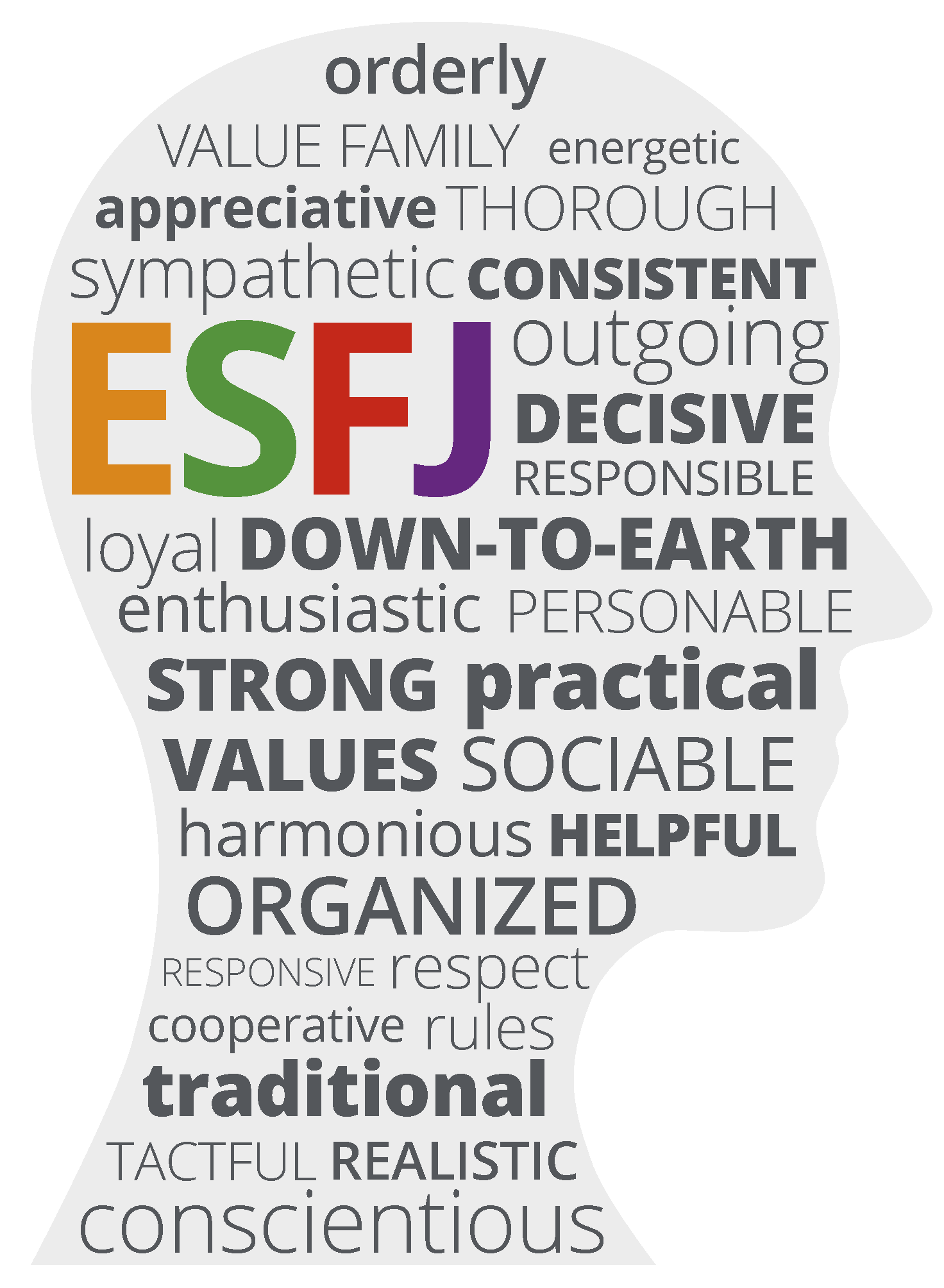
Caring—They’re considerate and thoughtful in the way they interact with others.
Friendly—They’re kind. They often enjoy working or interacting with others.

Harmonious—They tend to avoid conflict and confrontation, creating an atmosphere of kindness and tolerance.
Organized—They make sure that everyone knows exactly what needs to be done to complete tasks in a structured, accurate way.
Traditional—They value established processes and family, community, and social traditions.
Interesting facts about ESFJs

ESFJs are driven by their preference for Feeling and will often show this process openly to the world around them. They are nurturing, people-pleasing types, who will typically be the ones to honor family traditions and uphold the values within a group.
Hobbies and interests

People with ESFJ preferences tend to enjoy social events—getting their friends together, celebrating holidays, or continuing family traditions. They’re likely to be active in sports groups or local committees. They’ll probably prefer to spend their spare time with others and may dislike being on their own for long periods of time.

They may enjoy:
Volunteering for a charity, supporting the local community, or helping in a local school.
Singing, playing, or listening to music.
Playing a team sport.
Joining a dance or cookery class.
Stretches

Stretches are potential development areas we might miss based on our personality preferences. Awareness of possible stretches or vulnerabilities can be helpful for personal or professional development and improve our relationships with others.

Tap a development area for quick tips from our MBTI<sup>®</sup> experts.
People with ESFJ preferences might:
Find it hard to make objective decisions when their feelings (or the feelings of others) are involved.

People with ESFJ preferences may find it helpful to talk to the people who are likely to be affected by their decisions. Do other people actually feel the way they expect them to?
Ignore problems in their attempts to avoid conflict.

Next time they see a problem, encourage them to explore the impact it might have on them, their goals, their team or organization, or on other people. Would addressing the problem straight away help to prevent a worse problem or conflict later?
Seem to micromanage others.

Know someone who does this? Try to encourage them to make an effort to understand other people’s perspectives and ways of doing things. It may also help to remind them that there are some things they can’t control.
People with ESFJ preferences may find it helpful to talk to friends or colleagues who can give them feedback to help them manage their natural approach.
Lose sight of what’s really important because they’re trying to please too many people at once.

Know someone who does this? Encourage them to think carefully about the impact of new tasks or responsibilities before accepting them.
They may find it helpful to keep a to-do list or add tasks to an online calendar so that they can easily see when they might be taking on too much.
How others see you

People are likely to see you as warm and sociable—someone who enjoys interacting with others. You’re often interested in other people as individuals and pay attention to what’s important to them.

Others usually see your:
Conscientiousness
Organized approach
Realism
Because harmony is so important to you, you tend to accommodate other people’s views and put their needs before your own. When talking about your values or something of real importance to you, you might surprise others by sharing your opinion more strongly or firmly than you usually would.
Careers

People with ESFJ preferences are usually helpful, tactful, compassionate, and orderly.

They’ll usually:
Focus their energy and attention on other people’s day-to-day needs.
Enjoy organizing people to work collaboratively toward projects or goals that are important to them.
Resist unnecessary change, preferring instead to rely on established ways of doing things that seem to be working well.
Want to create harmony or resolve interpersonal issues as soon as possible.
They like to know what’s expected of them so that they don’t let other people down. They work best in structured environments—where there isn’t structure, they’re likely to enjoy creating it.
Popular occupations

Popular occupations for people with ESFJ preferences include:
Human resources
Counselor
Team building
Nursing
Medicine
Social worker
Office manager
College advisor
Teacher
Curriculum development
Photographer
Operations manager
Career trends

ESFJs aren’t typically looking to change the world. They prefer to make a big impact within their small team. They enjoy face-to-face contact with both colleagues and clients, and they like to follow up regularly to see the results of their work.
Because ESFJs are such natural caretakers, they tend to do well in careers where they can care for others—whether in the medical industry, human resources, or teaching.
Leadership style

In leadership or management roles, people with ESFJ preferences are likely to:
Lead through the personal attention they show to others.
Set an example of hard work and dedication.
Build good relationships and keep others well-informed.
Continue the traditions of their organization.
Approach to teamwork

ESFJs love working as a part of a team—especially with people they’re close with. They might find themselves naturally falling into the role of the mediator or nurturer, encouraging others and helping the team to stay on task when times get tough.
However, they may become discouraged if the team changes course too quickly or pitches untraditional ideas. Working with people who take a different approach may help them to see different viewpoints and broaden their horizons in a way they wouldn’t otherwise do.
Problem-solving approach
When trying to solve a problem, people with ESFJ preferences will usually focus their energy on:
Considering the effects their actions might have on the people involved.
Gathering as many facts and as much information as possible.
They don’t usually spend as much time or energy:
Looking into other possible solutions.
Examining the logical consequences of their actions.
Preferred working environment

At work, people with ESFJ preferences tend to value:
People-focused organizations.
Conscientious and cooperative colleagues.
A goal-oriented approach that rewards organization and efficiency.
A focus on facts and values.
Remote working tips
Remote working tips for people with ESFJ preferences:
Create a dedicated home office or working area where you can concentrate and focus away from family or friends.
Find ways to keep in contact with people you know. Schedule regular informal meetings and virtual get-togethers.
Design virtual traditions and rituals to help bring people together online.
Communication is more difficult when you’re working remotely. Be careful not to take offence when no offence is intended.
Remember that other people might not want to meet via video chat or talk on the phone. Email and IM both have legitimate roles to play in remote working.
Relationships

People with ESFJ preferences tend to adhere to traditional societal norms and hierarchies when it comes to their personal relationships. They frequently want to uphold the same traditions that their parents and grandparents honored.
ESFJs value family, a tight-knit circle of friends, and a stable romantic partner. Conscientious and dependable, they are often appreciated for their nurturing approach to relationships.
Conflict

ESFJs tend to avoid conflict in case it threatens their valued relationships and structures. They are often uncomfortable with harsh comments or criticism.
However, when it comes to their values and beliefs, ESFJs may become more defensive. If they don’t understand someone’s actions, or someone reacts differently than they might expect, this may become a source of conflict.
If you have ESFJ preferences, you can minimize conflict in your relationships by:
Reminding yourself that there are lots of different kinds of people with lots of different values. Instead of trying to convince others to share your values, let them be.
Trying not to interfere in a conflict simply because it threatens the stability of the group. It’s perfectly healthy for people to disagree and debate, even if this isn’t your preferred communication style.
Sharing your feelings honestly and directly. If you’re feeling unappreciated or other people don’t seem to be listening to your opinions, take care to avoid becoming bitter or passive-aggressive.
Friendship

People with ESFJ preferences are the connecting link for their friendship group. They’re typically the ones who plan activities, remember everyone’s birthday, collate photographs of important events, and call once a week.
Friends know they can lean on ESFJs for emotional support and a listening ear. But ESFJs may feel undervalued if their friends become busy or don’t get as excited about traditions as they do.
Love

ESFJs are fully committed and dedicated to their romantic partners. They tend to gravitate toward traditional relationship structures and may quickly start to think about future plans or long-term goals with a partner.
They often work well in a relationship with someone who challenges them to take small steps out of their comfort zone. However, they’re usually looking for someone who shares the same values, beliefs, and moral code. They will often talk honestly and directly with prospective partners, sharing their expectations to make sure they’re on the same page.
Parenting

The MBTI framework can be very helpful when it comes to raising children. Knowledge of your own communication habits, stress triggers, and preferences often makes parenting easier. By integrating an awareness of differences into family life, the whole family can benefit from these insights.
People with ESFJ preferences may have an active drive to become parents. They may feel it’s their duty to pass down their values and traditions to their children, and make them feel loved and supported as part of a family unit.
ESFJ parents may find it stressful if their children stray from the path set out for them or form beliefs that are incompatible with their own.
If you have ESFJ preferences and you think your child shares your Sensing and Feeling preferences, this can help you to understand how your child takes in information and makes decisions—both of which are important for how you communicate as a parent. If you think your child’s preferences are different than yours, self-awareness will help you to change your communication and parenting style to better suit those preferences.
Stress and resilience

Different people tend to get stressed by different situations. We also tend to react to stress differently.
Here are some of the things people with ESFJ preferences may find stressful:
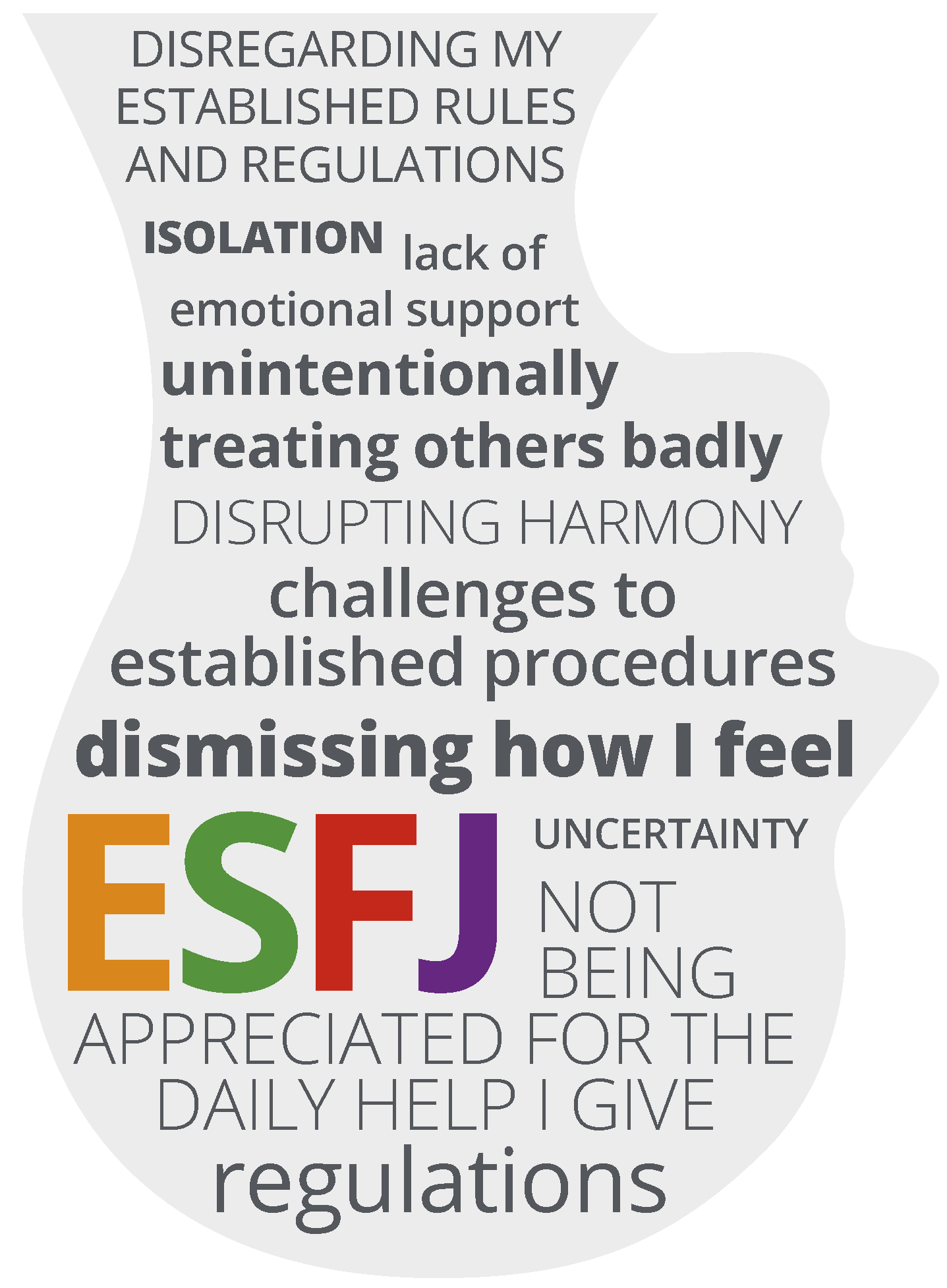
When they’re stressed, people with ESFJ preferences are likely to:
Seem stubborn or inflexible in their need for harmony.
Become oversensitive to what other people think or say about them.
Focus so much on the needs of others that they forget to take care of themselves.

At times of extreme or prolonged stress, they may start to behave uncharacteristically. They might:
Withdraw from others.
Get distracted easily or have difficulty concentrating.
Become overcritical of themselves or convinced of their own incompetence.
To help someone with ESFJ preferences recover from stress, encourage them to spend some time alone to think things through or consider alternative ways to look at the situation.
Managing stress

If you have ESFJ preferences, try these simple strategies to balance your feelings during times of stress:
Give people the benefit of the doubt. If the rest of the group seems disengaged or don’t seem to appreciate your efforts, it may just be that they’re busy or overwhelmed.
Think of yourself and prioritize your own needs. While you’re a natural caretaker, you need to take care of yourself as well. Practice self-care to balance your care for others.
Learn to enjoy alone time. Instead of dwelling on the time you spend alone, learn to enjoy having time for your own interests. Use the time to recharge.
Remember that everyone has different values. Don’t try to force traditions on other members of your group. Try to allow them to find their own enjoyment in the time you spend together.
How does ESFJ compare?
See how ESFJ relates to any other type side by side.
Compare ESFJ