Enterprising explorer
Overview
People with ENTP preferences tend to have an innovative way of thinking, often solving complex problems in creative ways. They see connections, recognize patterns in systems, and spot new opportunities that others might miss. People often think of them as clever and resourceful.
Characteristics
Strengths

Competence is often important to people with ENTP preferences. They’re usually resourceful problem solvers and may enjoy complex or challenging situations.
Here are some common characteristics of people with ENTP preferences:
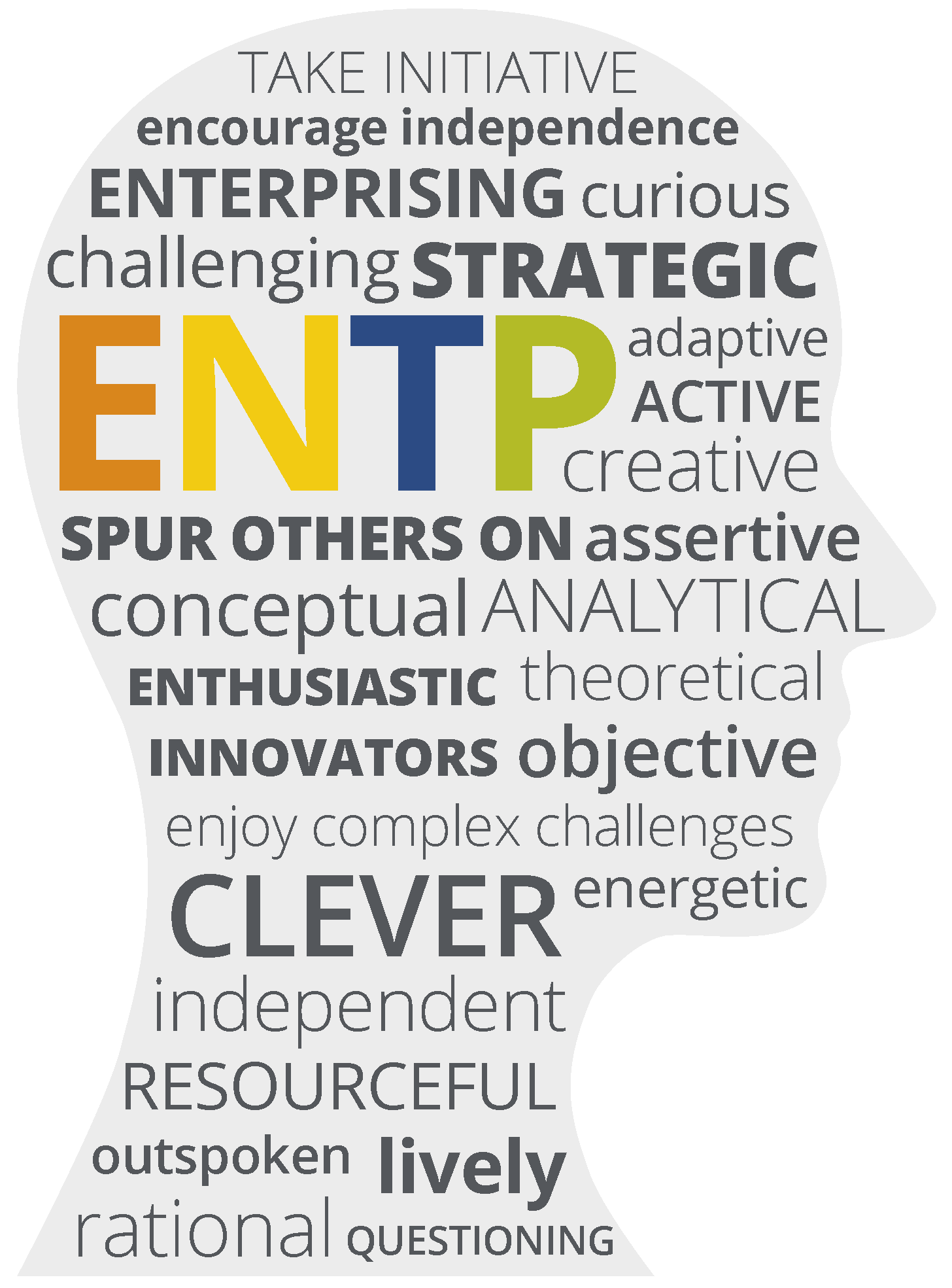
Challenging—They enjoy questioning, debating, and critiquing ideas. They’re often happy arguing both sides of an issue.
Enterprising—They find or create business opportunities and effectively motivate other people to follow their vision.

Innovative—They like to explore possibilities, interesting concepts, and exciting ideas.
Logical—They enjoy understanding how systems work and analyzing the opportunities available to them.
Strategic—They like to develop new business ideas and plan to make them happen.
Interesting facts about ENTPs

ENTPs are often highly intellectual. They tend to think in patterns, systems, and connections. They love a debate or some intelligent conversation.
Although ENTPs have a preference for Extraversion, others may see them as loners—especially when they’re stressed or upset.
Hobbies and interests

People with ENTP preferences tend to be adventurous in their approach to spare time. They usually like to try new things, take risks, and spend time with exciting people. They often prefer not to make plans in advance.

They may enjoy:
Learning something new.
Listening to a podcast or watching a TED talk about something intriguing.
Physically challenging activities, such as rock climbing or hiking.
Skilled sports, such as golf or martial arts.
Stretches

Stretches are potential development areas we might miss based on our personality preferences. Awareness of possible stretches or vulnerabilities can be helpful for personal or professional development and improve our relationships with others.

Tap a development area for quick tips from our MBTI<sup>®</sup> experts.
People with ENTP preferences might:
Have difficulty empathizing with others.

Know someone who does this? It may help them to gather feedback from friends and colleagues. What could they do differently to increase their awareness of others?
Be so competitive that they forget to pay attention to other people’s contributions.

When they’re working on a project or as part of a team, people with ENTP preferences may find it helpful to focus on how individual contributions help the team get things done or achieve project aims. You can help by reminding them to thank others for their efforts as well as for results.
Appear to have a lack of respect for tradition in their efforts to bring about change.
Know someone like this? Try asking questions to encourage them to focus on the past or present.
For example, what would it be like if things didn’t change? Is there anything that seems to be working well and therefore might not actually need to change?
Lose themselves in theories or models and forget to take notice of what’s going on around them.

People with ENTP preferences may find it helpful to plan breaks in their day when they can pause, interact with others, and focus on the world around them. This time could even be used as an opportunity to discuss theories or models with others.
How others see you

At your best, people tend to see you as challenging and innovative. They’re likely to notice your enthusiasm for change and your desire to seek out new and exciting ideas for the future.

Others usually see your:
Independence
Creativity
Assertiveness
You don’t often share your analysis with others. People are likely to see you as articulate and inspiring, but they may not expect or understand the depth of your reasoning.
Careers

People with ENTP preferences tend to be innovative, strategic, and analytical, with a range of skills or talents.

They’ll usually:
Seek out opportunities that might not be obvious to others.
Develop strategies in line with their goals, then use their energy and enthusiasm to motivate others to achieve them.
Prefer to take a broad view when making decisions, rather than considering detailed information.
Focus on creative or imaginative ways to make sense of the world.
They’re at their best when they’re able to challenge themselves. They like to question theories and approaches that take them out of their comfort zones. Independence and autonomy are likely to bring out the best in them.
Popular occupations for ENTPs

Popular occupations for people with ENTP preferences include:
Lawyer
Writer
Linguistics
Psychologist
Human resources
Public speaker
Politician
School psychologist
Radio or TV personality
Professor
Engineer
Career trends

There isn’t a single industry that tends to appeal to people with ENTP preferences. Instead, they’ll generally focus on specific systems and how they can improve them.
For example, they could enjoy working in a fast-paced, solution-oriented career as a politician, a professor, or a lawyer. Many ENTPs have careers that encourage them to think outside the box and advise others about new ways of doing things.
Leadership style

In leadership or management roles, people with ENTP preferences are likely to:
Plan theoretical systems to meet the needs of the organization.
Easily persuade others to agree with their way of thinking.
Encourage others to work independently.
Use theories and models to manage change.
Approach to teamwork

People with ENTP preferences tend to look for ways to improve the current way of doing things. They’re open to all possibilities and don’t mind hearing other people’s opinions.
Once they decide on a chosen direction, they’re good at rallying others to get on board. In a team without an existing hierarchy, they may start to take on the role of the leader, which could upset other members of the team.
Overall, ENTPs are concerned with getting the job done. As long as they communicate clearly and keep their ego in check, they can often help a team succeed in ways that others will appreciate.
Problem-solving approach
When trying to solve a problem, people with ENTP preferences will usually focus their energy on:
Creating and exploring possible solutions.
Examining the logical consequences of their actions.
They don’t usually spend as much time or energy:
Considering the feelings of the people involved.
Gathering facts and information.
Preferred working environment

People with ENTP preferences tend to value:
Independent colleagues who are good at what they do.
Autonomy to solve complicated problems in their own way.
A change-oriented approach that rewards risk-taking.
Flexibility and challenge.
Remote working tips
Remote working tips for people with ENTP preferences:
Seek out colleagues you can share ideas and possibilities with online.
Develop several channels of communication and use them to put forward your ideas to others.
Take frequent breaks when you’re working on routine tasks.
Working from home means you can be flexible about where, when, and how you work—but remember to consider the working patterns of others before you contact them!
Some situations may require a quick response to an email or IM. Don’t forget to reply or spend too long deliberating.
Relationships

People with ENTP preferences sometimes have a reputation for being challenging—in a good way! They are often appreciated by their friends, family members, and romantic partners for teaching them new things and suggesting helpful solutions to their problems. It’s not surprising that friends and loved ones turn to ENTPs in a crisis. They’re often great at problem-solving and handling stressful situations.
Conflict

ENTPs are great at resolving other people’s conflicts. Pragmatic problem solvers, they tend to find it easy to stay objective and leave personal problems out of the situation. While they generally suggest innovative solutions, they may need to remind themselves to listen to both sides of the conflict before jumping in with a quick-fix solution.
ENTPs generally love a good debate, but others may find this style of conversation overwhelming or stressful. At times, ENTPs may need to keep their opinions in check or find new ways to communicate; otherwise, they could risk challenging others to the point that they become upset.
If you have ENTP preferences, you can minimize conflict in your relationships by:
Focusing on the practicalities of the situation rather than outside-the-box solutions.
Remembering that sometimes it’s important to find the root of a problem rather than a quick fix.
Talking less and listening more. Instead of continuing a debate when the other person gets upset, give them space to share their views.
Friendship

As friends, ENTPs are helpful and energetic. They love challenging debates and friends who can keep up with their exciting conversation style. They often enjoy going for a long dinner with their friends and talking for hours about shared interests or the meaning of life—though oversharing personal problems can make them uncomfortable.
When a friend is going through a serious issue, people with ENTP preferences will be there to offer support or do the research to help them out.
Love

People with ENTP preferences tend to enjoy partnerships and being in love. However, they don’t enjoy the emotional turmoil that can sometimes accompany a relationship. As a result, they often find partners who are independent and reserved, as this kind of person will typically handle problems on their own without needing too much emotional support.
ENTPs usually show their love for others by engaging in thoughtful conversation and spending quality time on mutually enjoyable activities. They do best in a relationship where both people can enjoy their freedom and independence.
Parenting

The MBTI framework can be very helpful when it comes to raising children. Knowledge of your own communication habits, stress triggers, and preferences often makes parenting easier. By integrating an awareness of differences into family life, the whole family can benefit from these insights.
Parents with ENTP preferences are caring problem solvers. They value independence and self-reliance, and likely teach the same values to their children. They are ready and willing to help their children, but aren’t likely to coddle them or maintain high levels of support as their children grow into adulthood.
ENTP parents may become stressed if their children don’t listen to their advice, or if they feel they don’t know how to help their children with a problem.
If you have ENTP preferences and you think your child shares your Intuition and Thinking preferences, this can help you to understand how your child takes in information and makes decisions—both of which are important for how you communicate as a parent. If you think your child’s preferences are different than yours, self-awareness will help you to change your communication and parenting style to better suit those preferences.
Stress and resilience

Different people tend to get stressed by different situations. We also tend to react to stress differently.
Here are some of the things people with ENTP preferences may find stressful:
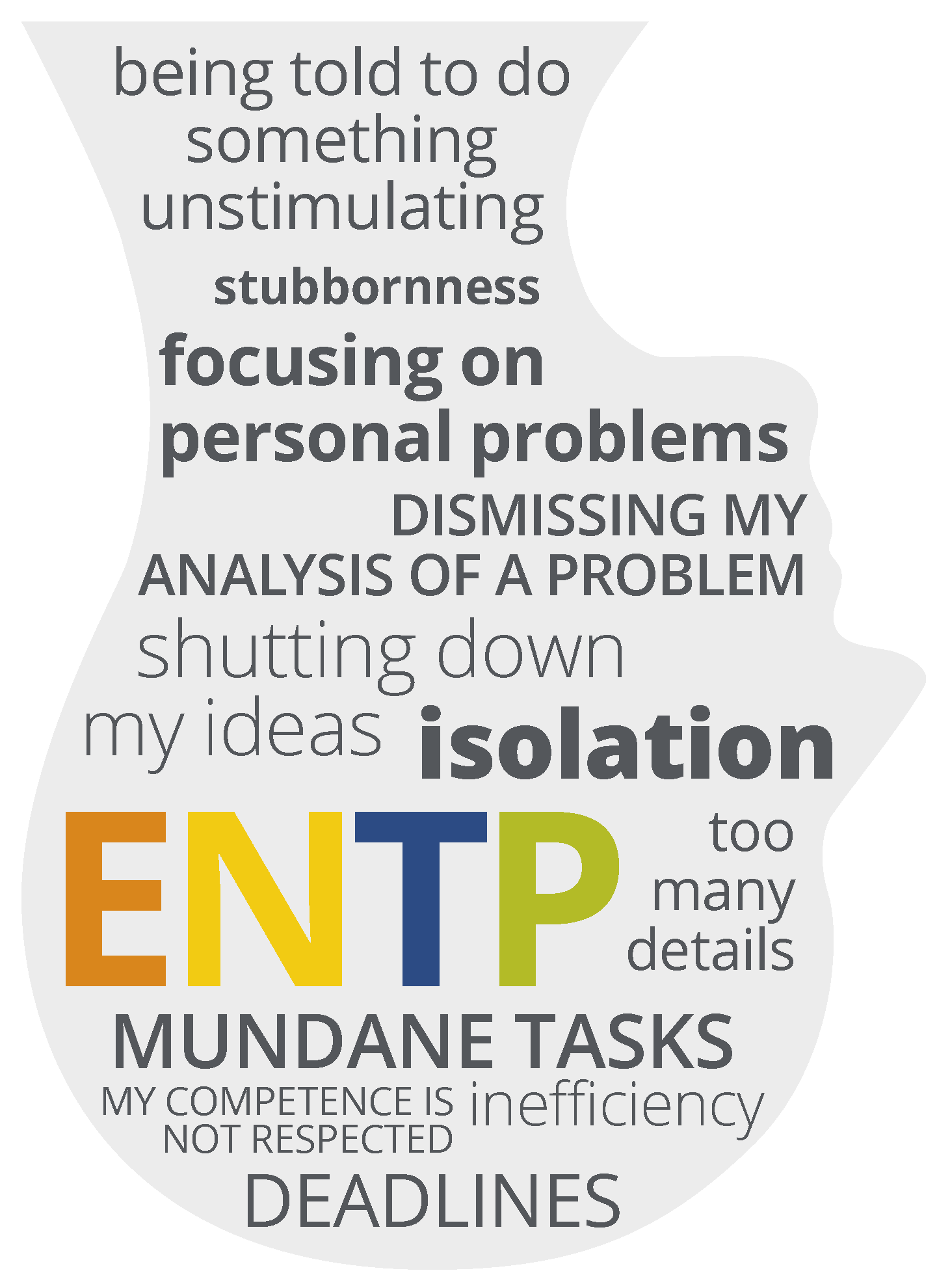
When they’re stressed, people with ENTP preferences are likely to:
Get distracted easily.
Become stubborn or impatient.
Be overcritical of others—especially people they see as incompetent.

At times of extreme or prolonged stress, they may start to behave uncharacteristically. They might:
Fixate on unimportant or misleading details.
Become passive-aggressive.
Show sudden and inappropriate outbursts of emotion.
To help someone with ENTP preferences recover from stress, give them some time on their own to decide on a course of action. Encourage them to set boundaries and say no to new tasks or responsibilities until they feel calm again.
Managing stress

If you have ENTP preferences, try these simple strategies to balance your feelings during times of stress:
Learn to take a break from work when you’re feeling stressed. It’s important to step away when you’re not in the best headspace. Remind yourself that you’ll do better when you’re fresh and well rested.
Try something new every day. If you feel like you’re in a rut, pick up a new hobby or find a new way to approach a task you have to do anyway. This will challenge your mind and may stop you feeling like you’re stuck in a loop.
Take a step back and remove yourself from other people’s personal problems. Your instinct may be to try and solve the problem (and you may get upset if you can’t). Remember that sometimes people just want you to listen.
How does ENTP compare?
See how ENTP relates to any other type side by side.
Compare ENTP