Imaginative motivator
Overview
People with ENFP preferences tend to value depth and authenticity. Often described as lively but restless, they’re willing to consider almost any possibility. They usually enjoy new experiences and meeting new people.
Characteristics
Strengths

People with ENFP preferences tend to see life as a creative adventure full of exciting possibilities. Close, authentic relationships are likely to be important to them.
Here are some common characteristics of people with ENFP preferences;
Creative—They suggest innovative ideas and different ways of doing things.
Spontaneous—They use their energy to get things going. They’re comfortable responding spontaneously to the present with little need to plan their time in advance.
Enthusiastic—They tend to say yes to any exciting possibilities or opportunities that come their way. Not only that—they encourage others to get involved as well.
Perceptive—They’re insightful, particularly about the people around them. They make connections between events and information that other people might not see.
Positive—They’re optimistic. They see the best in people and ideas. They tend to support and welcome change.
Interesting facts about ENFPs

ENFP preferences are fairly common, especially in women. While some preferences tend to lead people onto a direct pathway or into specific types of careers, ENFPs rarely take a single route in life. In fact, they often change their minds, careers, and living situations a number of times throughout their lives.
Hobbies and interests
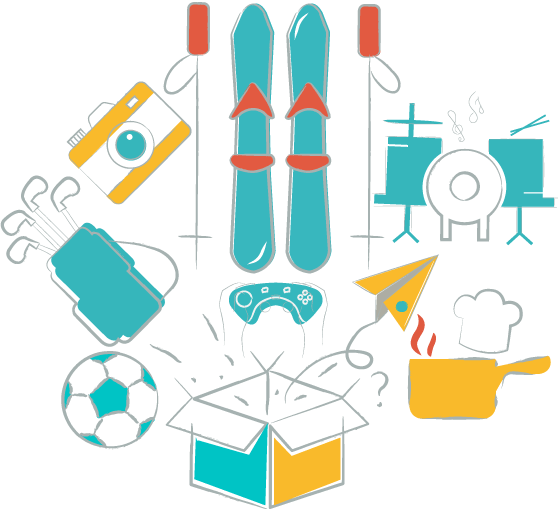
People with ENFP preferences tend to be enthusiastic about a range of activities, including imaginative and unconventional options such as performance art or role-play. They’re usually active in sports and social gatherings.
They often need a lot of stimulation and may bring elements of play into their work to keep them feeling energized.
They may enjoy:
Playing or listening to music.
Acting, theater, or dancing.
Working out with Zumba or fitness classes.
Exploring development opportunities on their own, with friends, or in a class.
Stretches

Stretches are potential development areas we might miss based on our personality preferences. Awareness of possible stretches or vulnerabilities can be helpful for personal or professional development and improve our relationships with others.

Tap a development area for quick tips from our MBTI<sup>®</sup> experts.
People with ENFP preferences might:
Move on to new ideas or projects without completing what they’ve started.
Project or time management tools may help people with ENFP preferences meet their goals. They may also find it helpful to keep a to-do list or add tasks to an online calendar.
Overlook relevant details and facts.
Know someone who does this? They may find it helpful to discuss detailed information with friends or colleagues who can highlight relevant points they might have missed. Encourage them to ask for help or advice if they feel overwhelmed by details.
Try to do too much at once.
Know someone who does this? Encourage them to think carefully about the resources required to complete new tasks or responsibilities before accepting them.
Procrastinate while searching for the best possible solution to a problem.
People with ENFP preferences may find it helpful to make lists to help them decide which tasks are most important or most relevant to their goals. You can help them by asking questions that focus on the impact a task could have.
For example, what are the benefits of finishing a task and moving on? Which tasks do they need to complete to their high standards, and which could be finished more quickly?
How others see you

At your best, people tend to see you as enthusiastic and friendly. Your positive outlook often encourages others to get involved.
Others usually see your:
High energy levels
Friendly nature
Flexible approach
You’re probably seen as talkative, but others may not know about your deeply held inner values. You might find it difficult to talk about your core beliefs with your usual ease and fluency.
Careers

People with ENFP preferences tend to be insightful, innovative, and tireless in their pursuit of new possibilities.

They’ll usually:
Use their creativity to find and suggest opportunities for change.
Work collaboratively and facilitate discussions to make sure everyone’s ideas are heard and recognized.
Make connections easily, especially between people.
Trust their insights—and be confident relying on them.
They thrive on appreciation and support from other people—and give others the same in return. They value harmony and goodwill. They generally like to please other people and will adapt their behavior or priorities to the needs of others when they can.
They work best when they can be flexible and independent. Routine or supervision are likely to stifle their creativity.
Popular occupations

Popular occupations for people with ENFP preferences include:
Actor
Artist
Musician
Entrepreneur
Author
Motivational speaker
Lawyer
Marketing
Human resources
Counselor or career counselor
Teacher
Coach or trainer
Nonprofit
Start-ups
Career trends
People with ENFP preferences usually want to leave their career paths open to new possibilities. They’re likely to shift or entirely change their careers more than once in their lives.
Despite this, they tend to look for careers where they can express their creativity, work with new people, and have some influence in innovative problem-solving. They’re also adept at creating positive change and pursing newfound interests, which often leads to an interest in entrepreneurship or start-up organizations.
Leadership style
In leadership or management roles, people with ENFP preferences are likely to:
Lead others with energy and enthusiasm.
Enjoy the start-up phase and new initiatives.
Become a spokesperson for a worthy cause.
Support and motivate others.
Approach to teamwork

ENFPs are often the most energetic members of their teams—the ones who keep everyone else on their toes and excited about the project.
They’re quick to try new approaches and open to hearing other people’s ideas. However, they may bounce from task to task and struggle to focus on one thing at a time. They work best when there is lots of room for experimentation, with teammates who are also open to new ideas.
Problem-solving approach
When trying to solve a problem, people with ENFP preferences will usually focus their energy on:
Creating and exploring possible solutions.
Considering the effects their actions might have on the people involved.
They don’t usually spend as much time or energy:
Examining the logical consequences of their actions.
Gathering facts and information.
Preferred working environment

People with ENFP preferences tend to value:
Imaginative colleagues focused on people and possibilities.
A collaborative atmosphere that encourages ideas.
Variety and challenge.
A flexible and casual working space.
Remote working tips
Remote working tips for people with ENFP preferences:
Find some trusted colleagues you can share possibilities and ideas with online.
Immerse yourself in a creative work project.
Take a break from routine tasks to connect with people. You might also find it helpful to try mindfulness training or meditation.
Working from home means you can be flexible about where, when, and how you work—but remember to consider the working patterns of others before you contact them!
You might not always respond quickly to emails or messages from others (and that’s fine). Remember that some people or situations may require a quicker response than usual.
Relationships
People with ENFP preferences tend to be very involved and incredibly energetic with their friends, family, and romantic partners. They’re great listeners who often have a way of making loved ones feel like the best versions of themselves.
ENFPs thrive around other people. They frequently ask others to spend time together and love to have meaningful conversations.
Conflict

ENFPs may become irritated by people who are narrow-minded or closed off to new ideas. They often make a point to listen to the ideas and opinions of the people around them.
Others usually appreciate this democratic approach, but it can sometimes lead to conflict. ENFPs may have difficulty choosing a path forward, or may hold up a decision because they’re fixated on minor details—both of which can cause stress and frustration for others.
If you have ENFP preferences, you can minimize conflict in your relationships by:
Focusing your energy on finding solutions or making concrete decisions.
Remembering that sometimes facts and figures are just as important as abstract ideas.
Talking less and listening more.
Making an effort to stay on course rather than throwing out alternative routes.
Friendship
As friends, ENFPs are fun, supportive, and open-minded. They often have a large group of friends from diverse backgrounds. They love to hear everyone’s stories and they’re always open to learning new things from their friends.
Because they have such a large group of friends, ENFPs might spread themselves thin at times. This could lead to hurt feelings if they overcommit themselves. Making one-on-one time with friends is great way for them to avoid this.
Love

In a relationship, people with ENFP preferences are open to new opinions, ideas, and ways of life. They love to meet new people, which means they might be open to dating for a while before they choose a long-term partner.
ENFPs frequently experience a wide range of emotions, which might be overwhelming for some people. They tend to do best with a partner who goes with the flow and can handle their strong emotions. For ENFPs, the right partner is likely someone who appreciates their versatility and openness to exploring new things.
Parenting
The MBTI framework can be very helpful when it comes to raising children. Knowledge of your own communication habits, stress triggers, and preferences often makes parenting easier. By integrating an awareness of differences into family life, the whole family can benefit from these insights.
Parents with ENFP preferences likely encourage their children to strive for their dreams and share their feelings, thoughts, and opinions openly. They tend to value creativity and forward thinking, which helps to create an open and nurturing environment for children.
ENFPs may feel stressed if they’re forced to overcommit to plans or manage schedules for themselves, their partners, and their children.
If you have ENFP preferences and you think your child shares your Intuition and Feeling preferences, this can help you to understand how your child takes in information and makes decisions—both of which are important for how you communicate as a parent. If you think your child’s preferences are different than yours, self-awareness will help you to change your communication and parenting style to better suit those preferences.
Stress and resilience

Different people tend to get stressed by different situations. We also tend to react to stress differently.
Here are some of the things people with ENFP preferences may find stressful:
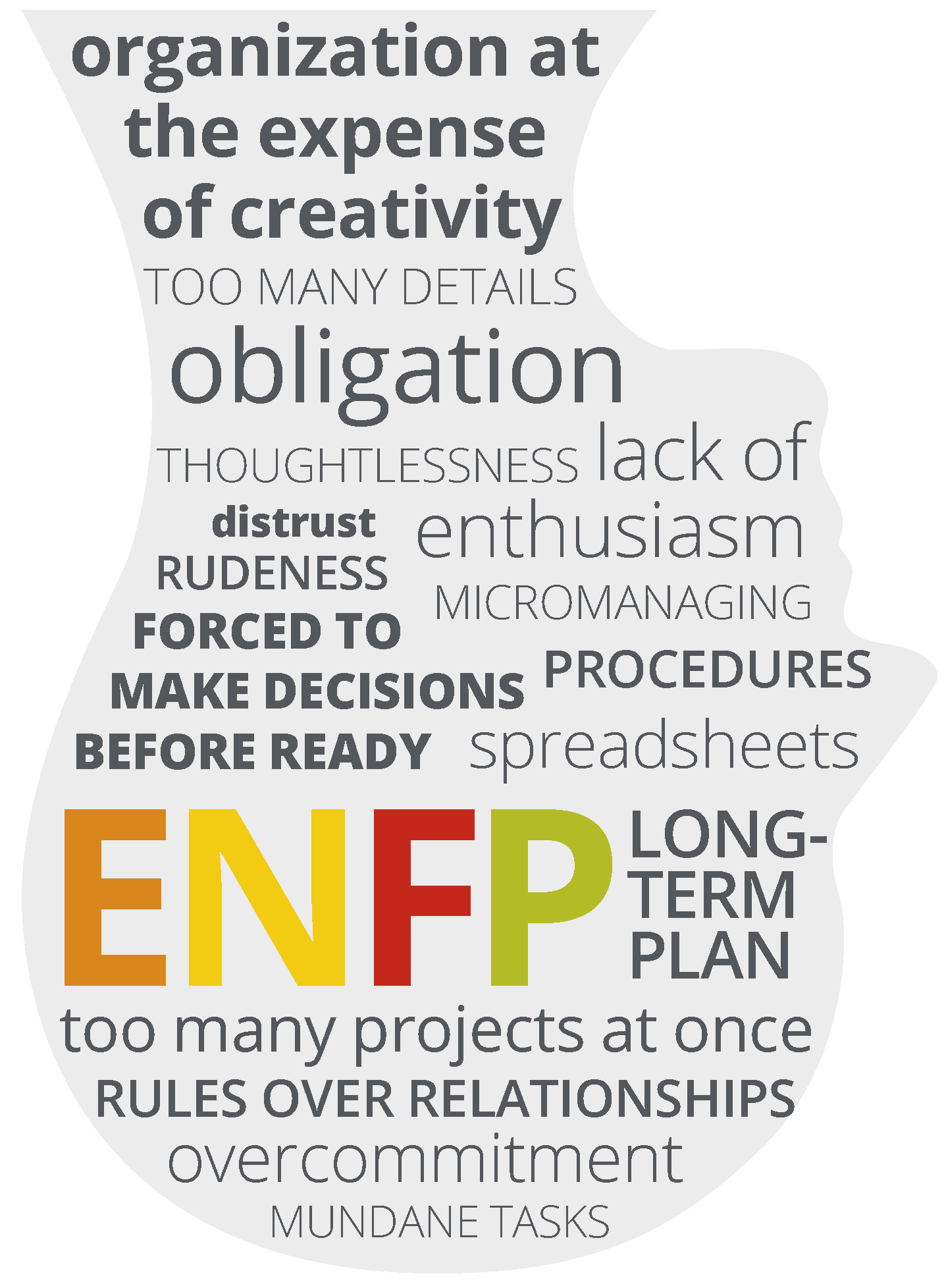
When they’re stressed, people with ENFP preferences are likely to:
Become louder and more active.
Have difficulty focusing on a task, moving quickly from one thing to the next.
Seem erratic or unreasonable.

At times of extreme or prolonged stress, they may start to behave uncharacteristically. They might:
Fixate on unimportant or incorrect facts.
Feel marginalized and alone.
Insist on change for the sake of it.
To help someone with ENFP preferences recover from stress, give them some time on their own to decide on a course of action. Encourage them to set boundaries and say no to new tasks or responsibilities until they feel calm again.
Managing stress
If you have ENFP preferences, try these simple strategies to balance your feelings during times of stress:
Set realistic, manageable deadlines. Although you’d prefer not to have a deadline at all, sometimes they’re unavoidable. If you’re aware of a deadline well ahead of time, you can take steps to ready yourself before it comes up.
Make time to experiment with new projects. Instead of committing to every interesting project and bouncing between them, dedicate some time to trying new things and being creative. This will help you worry less about those other, more regimented tasks.
Be open about your goals and expectations for your relationships. Don’t commit to restrictive relationships that you won’t be able to uphold. Avoid stress for yourself (and others) by making it clear that you need a lot of free time and minimal commitments.
How does ENFP compare?
See how ENFP relates to any other type side by side.
Compare ENFP