Compassionate facilitator
Overview
People with ENFJ preferences tend to be organized and people-focused. Imaginative, trustworthy, sociable, and persuasive, they’re often great at creating harmony, encouraging self-expression, and inspiring others.
Characteristics
Strengths

Harmony is usually very important to people with ENFJ preferences. They’ll often work hard to maintain cooperative, collaborative relationships with their colleagues, friends, and family.
Here are some common characteristics of people with ENFJ preferences:
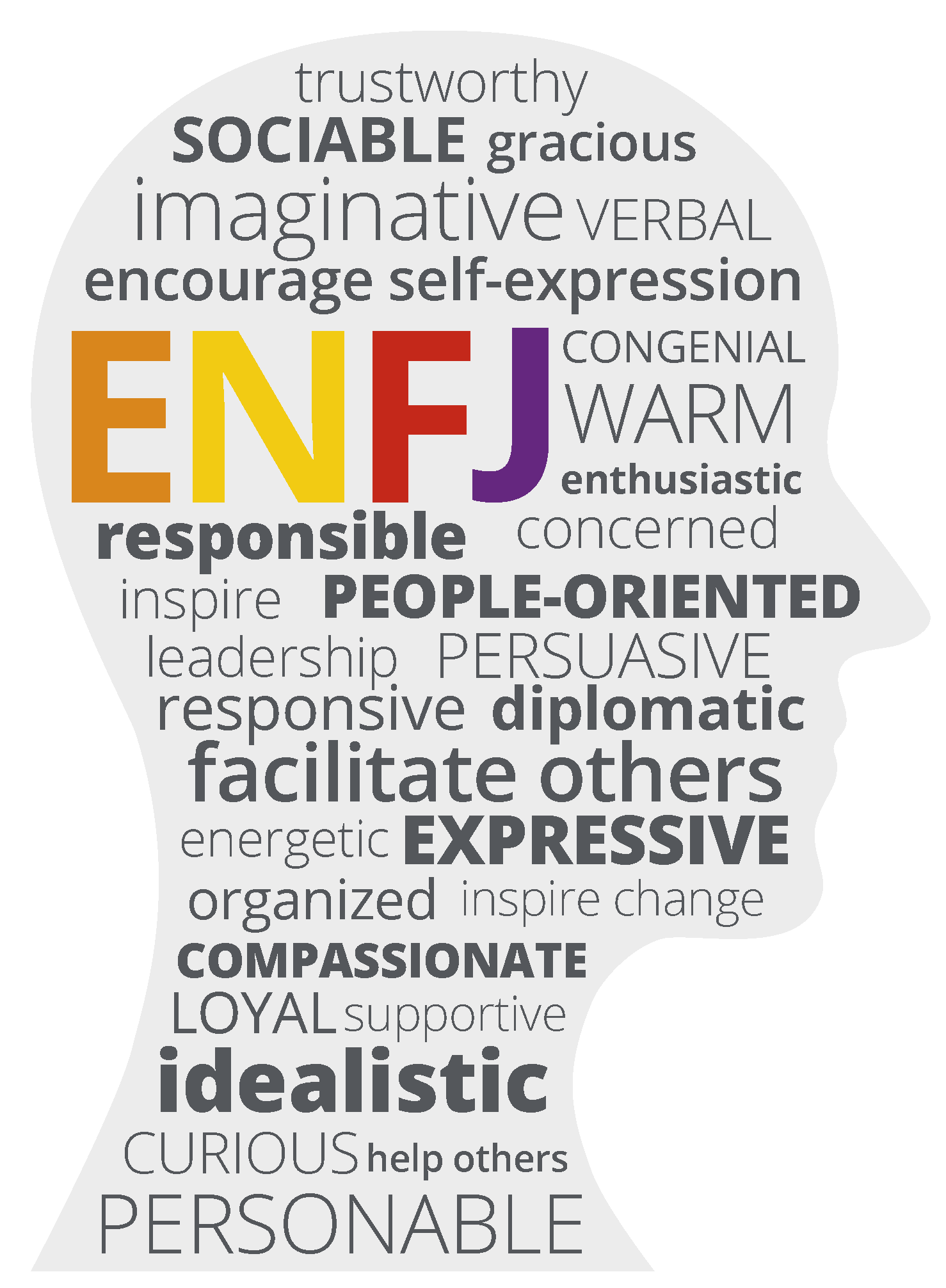
Collaborative—They encourage everyone to work together to achieve common goals, even when team members have different opinions or priorities.
Expressive—They share their thoughts and feelings openly and fluently.

Friendly—They focus their energy on creating and maintaining relationships with others.
Imaginative—They often see things from a unique perspective.
Responsible—Friends and colleagues can depend on them to do what they say they will (and do it on time).
Interesting facts about ENFJs

ENFJs make natural leaders. They are highly aware of other people’s goals and aspirations. In fact, they’re so concerned with the happiness of the people in their lives that they’ll often put a friend or colleague’s values before their own.
Hobbies and interests

People with ENFJ preferences tend to take a planful, structured approach to their spare time. Their concern for others may lead them to organize social events or days out with friends, family, or colleagues. They may enjoy literature and the arts more than competitive sports or other physical activities.

They may enjoy:
Reading, writing, or telling stories.
Organizing social events or volunteering for a charity.
Visiting museums.
Playing noncompetitive team sports or joining a fitness class.
Stretches

Stretches are potential development areas we might miss based on our personality preferences. Awareness of possible stretches or vulnerabilities can be helpful for personal or professional development and improve our relationships with others.

Tap a development area for quick tips from our MBTI<sup>®</sup> experts.
People with ENFJ preferences might:
Take constructive criticism personally or have difficulty receiving negative feedback.

Know someone who does this? Try to provide clear, task-focused, and specific feedback. Encourage them to ask questions if they’re unsure about any feedback they’ve received.
Find it difficult to make objective decisions when feelings are involved.

People with ENFJ preferences may find it helpful to talk to the people who are likely to be affected by their decisions. Do other people actually feel the way they expect them to?
Ignore problems in an attempt to avoid conflict.
Next time they see a problem, encourage them to explore the impact it might have on them, their goals, their team or organization, or on other people. Would addressing the problem straight away help to prevent a worse problem or conflict later?
Help others without giving them the opportunity to learn from their mistakes.

Know someone who does this? Try to encourage them to make an effort to understand other people’s perspectives and ways of doing things. It may also help to remind them that there are some things they can’t control.
People with ENFJ preferences may find it helpful to talk to friends or colleagues who can give them feedback to help them manage their natural approach.
How others see you

At your best, people see you as energetic and enthusiastic. You tend to move steadily into action, persuasively bringing other people along with you.

Others usually see your:
Supportive nature
Curiosity
Empathy
You communicate your ideas and opinions clearly, often inspiring others to work with you to achieve goals aligned with your values.
Careers

People with ENFJ preferences tend to be understanding, tolerant, and appreciative of others.

They’ll usually:
Have a genuine interest in other people.
Want to work toward a humanitarian vision—the culture of the organization they work for is likely to be very important to them.
Focus on helping others achieve their goals or fulfill their potential.
Use their insights and curiosity to explore possibilities and ideas that support the people around them.
They work best in a friendly, fast-paced, and energetic environment. They like to get things done. They work hard to make sure that everyone agrees with the decisions being made and commits to achieving shared goals.
Popular occupations

Popular occupations for people with ENFJ preferences include:
College recruiter
Career counselor
Counselor
Motivational speaker
Leadership developer
Teacher
Fundraiser
Alumni director
Training and development
Fitness instructor or health coach
Social worker
Sales and marketing
Career trends

People with ENFJ preferences love helping others to find their life mission or true calling. They’re likely warm, friendly helpers who enjoy the process of zeroing in on someone’s individual aspirations.
Because of these tendencies, people with ENFJ preferences are best suited to careers that allow them to get the most out of individuals and create harmonious collaboration in a group or organization. They tend to excel in the fields of counseling, teaching, training, and religion.
Leadership style

In leadership or management roles, people with ENFJ preferences are likely to:
Lead with enthusiasm, directly taking part in projects and people management.
Work to align actions and values.
Respond to the needs of others.
Inspire change that benefits people.
Approach to teamwork

ENFJs are naturally in tune with what each team member wants and needs. This makes them adept at creating harmony on a team. While they may become stressed at the first sign of conflict, they work incredibly hard to foster collaboration and encourage others to work together.
On a team, you’ll typically find ENFJs in charge of scheduling—organizing various moving parts and keeping everyone else on track.
Problem-solving approach
When trying to solve a problem, people with ENFJ preferences will usually focus their energy on:
Considering the effects their actions might have on the people involved.
Creating and exploring possible solutions.
They don’t usually spend as much time or energy:
Gathering facts and information.
Examining the logical consequences of their actions.
Preferred working environment

At work, people with ENFJ preferences tend to value:
A people-oriented and social workplace.
Colleagues focused on changing things for the better.
A supportive environment that encourages harmony, empathy, and appreciation.
An organized and decisive approach to tasks.
Remote working tips
Remote working tips for people with ENFJ preferences:
Keep in touch with people and keep track of what’s going on by having regular informal meetings or virtual meetups with friends and colleagues (old and new).
Build consensus by collecting and bringing together everyone’s ideas.
Remember that other people might skip the pleasantries in an email or IM—particularly if they’re busy or distracted. Try not to assume you’re being criticized where no offence is intended.
If your working day is too quiet, take a moment to connect with family or friends. Working from home means you’re allowed to be flexible.
You can’t support everyone all the time. Don’t forget your own needs!
Relationships

In a relationship, ENFJs tend to be warm and caring. They’re likely to focus on their partner’s happiness as much as their own. They want to see their partner achieve personal goals, and they’ll do whatever they can to help with this. Their intuitive, forward-thinking nature means they often know exactly what their partner needs and when they need it.
People with ENFJ preferences are incredibly concerned with harmony. This makes them selective when it comes to choosing a partner and determined to create a sturdy foundation once they enter into a relationship. Because it may take them a while to open up about their own feelings, they’ll probably only enter a relationship for the long haul.
Conflict

Conflict is difficult for ENFJs, so they tend to avoid it at all costs. They approach arguments or disagreements with the hope of ending the conflict as soon as possible.
In a relationship, their aversion to conflict often helps ENFJs avoid petty arguments or small disagreements. But they may avoid larger issues or leave them unresolved.
To manage conflict and truly resolve any issues in their relationships, ENFJs need encouragement and a safe space to voice their opinions. If they feel like they can trust the other person, they’ll speak up and get to the root of the problem.
If you have ENFJ preferences, you can minimize conflict in your relationships by:
Speaking up and standing your ground about the things that bother you, rather than worrying about the other person’s feelings. Remember, your views can add value and may even help to resolve a conflict. Not everyone sees disagreement as damaging to a relationship.
Trying not to focus on people’s feelings at the expense of everything else.
Using your natural empathy to welcome others into the dialogue and ensure that everyone’s needs are met. This is a valuable strength that can help others reach a positive resolution more quickly.
Friendship

ENFJs are thoughtful, considerate, and expressive friends, which often makes them a lot of fun to be around. They’re great listeners. They quickly perceive the emotional needs of others and tend to make their friends feel valued and understood. Because they care deeply about other people’s values, they will often try to help their friends achieve success or find happiness.
ENFJs won’t often share their own emotions—or, more importantly, their problems or issues—even with their friends. They may take a while to open up to new people. They tend to feel most comfortable with a small, tight-knit group of close friends.
Love

In love, people with ENFJ preferences are the ultimate cheerleaders. They help and encourage their partners to get what they want out of life. They are also caring and intuitive partners.
On the other hand, ENFJs may struggle to ask for what they need. An ENFJ’s ideal partner is someone who can get them to open up and talk about their own needs.
Parenting

The MBTI framework can be very helpful when it comes to raising children. Knowledge of your own communication habits, stress triggers, and preferences often makes parenting easier. By integrating an awareness of differences into family life, the whole family can benefit from these insights.
Parents with ENFJ preferences are often collaborative, considerate, and outwardly decisive.
Possible stress triggers for ENFJs include:
Feeling unappreciated or misunderstood
Being unable to stay on schedule
Negativity from children or family members
If you have ENFJ preferences and you think your child shares your Intuition and Feeling preferences, this can help you to understand how your child takes in information and makes decisions—both of which are important for how you communicate as a parent. If you think your child’s preferences are different than yours—Sensing or Thinking—your own self-awareness will help you change your communication style to better suit those preferences.
Stress and resilience

Different people tend to get stressed by different situations. We also tend to react to stress differently.
Here are some of the things people with ENFJ preferences may find stressful:
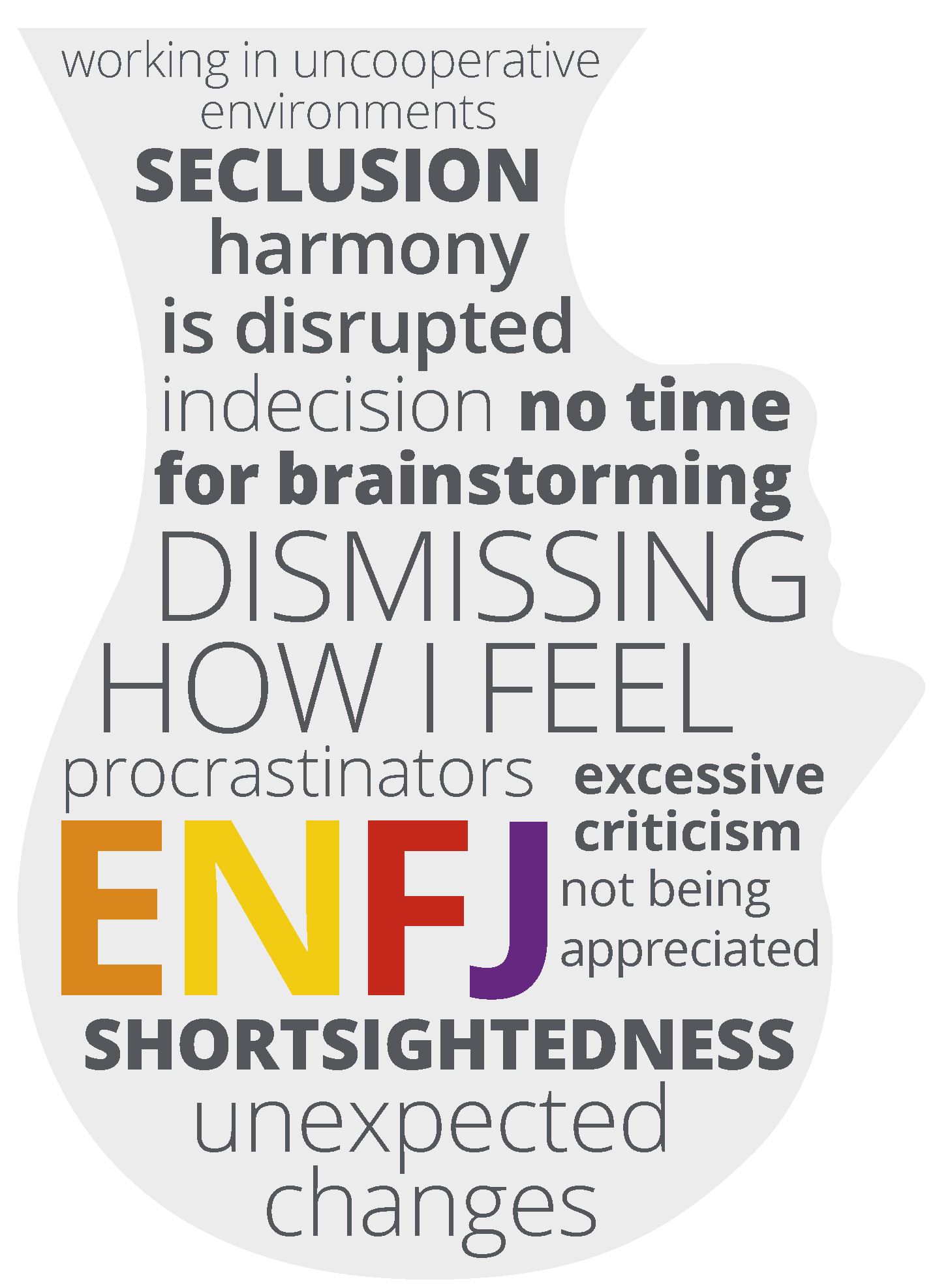
When they’re stressed, people with ENFJ preferences are likely to:
Become pessimistic.
Appear stubborn or inflexible in their need for harmony.
Become oversensitive to what other people think or say about them.

At times of extreme or prolonged stress, they may start to behave uncharacteristically. They might:
Become aggressive or frustrated.
Withdraw from others.
Loudly criticize themselves or others.
To help someone with ENFJ preferences recover from stress, encourage them to spend some time alone to think things through or consider alternative ways to look at the situation.
Managing stress

If you have ENFJ preferences, try these simple strategies to balance these feelings during times of stress:
Make it clear to teammates that your lines of communication are open—but be careful not to set unattainable expectations. Let people come to you when they need someone to talk to.
Remind yourself that some disagreement is unavoidable when a group of people get together. It’s not always your job to resolve conflict. Try to let some things go and avoiding taking everything personally.
Keep tabs on your own feelings. You probably focus on other people’s feelings and ambitions more than your own. Try some gentle meditation to see if this helps you tap into your own feelings. And be sure to speak up about anything you need.
How does ENFJ compare?
See how ENFJ relates to any other type side by side.
Compare ENFJ